Thursday, 23 March 2023

Remembering Thomas Cranmer

 Tudor history is extremely popular, and with Wolf Hall, Thomas Cromwell has come to prominence .  He is appreciated as an astute politician and a 'more human' person.  He has become 'flesh and blood'.  I've always admired Cromwell the politician.  What he achieved to give Henry VIII his 'divorce' and begin reform of the Church in England was very impressive.  However, the achievements of Thomas Cranmer have somewhat faded.  What Cromwell achieved in Parliament, Cranmer achieved in the Church.  He started out as the Boleyn family's chaplain, and rose to become Archbishop of Canterbury.  He introduced the Bok of Common Prayer.  He showed loyalty to both Anne Boleyn and Thomas Cromwell when they fell.   He managed to survive the cut throat politics of Henry VIIII's court, and was a loyal servant to Henry and his son Edward VI.  But he could not survive the wrath of Mary Tudor, and was burnt at the stake March 21st 1556 in Oxford.  


Thursday, 2 February 2023

Piers Gaveston's Opening Speech from Christopher Marlowe's play Edward II

 My father is deceas'd. Come, Gaveston,

And share the kingdom with thy dearest friend.

Ah, words that make me surfeit with delight!

What greater bliss can hap to Gaveston

Than live and be the favourite of a king!

Sweet prince, I come! these, thy amorous lines

Might have enforc'd me to have swum “from France,

And, like Leander, gasp'd upon the sand,

So thou wouldst smile, and take me in thine arms.

The sight of London to my exil'd eyes

Is as Elysium to a new-come soul:

Not that I love the city or the men,

But that it harbours him I hold so dear,—

The king, upon whose bosom let me lie,

And with the world be still at enmity.

What need the arctic people love star-light,

To whom the sun shines both by day and night?

Farewell base stooping to the lordly peers!

My knee shall bow to none but to the king.

As for the multitude, that are but sparks,

Rak'd up in embers of their poverty,—

Tanti,—I'll fawn first on the wind,

That glanceth at my lips, and flieth away.


The official title of Christopher Marlowe's play about Edward II was 'The Troublesome reign and Lamentable Death of Edward II, King of England, and the Tragical Fall of Proud Mortimer'.  It was first published in 1594.  I have been fortunate to see a couple of productions, set in the period of the time and modern day.  The opening speech sets the tone of the whole play.  Piers Gaveston has been banished by Edward's father, Edward Ist, and the play opens with his death and Piers receiving a letter from a besotted Edward, now King.  It is true that one of Edward II's first acts on becoming king was to recall Piers.   The relationship between Edward and Piers is made obvious from this opening speech, with Piers referring to himself as Leander.  Leander was a classical character from Greek mythology, who fell in love with Hero, a priestess of Aphrodite.  To meet with her in secret, Leander would have to swim to her.  Clearly, Piers sees himself returning to London to meet with his lover, Edward.  His intention is also to never bow and scrape to anyone else at court - and to be a thorn in their side and lead the king astray with his love of finery and frivolous activities such as poetry, music and masques.  

To read an excellent critique of the play, click here


Saturday, 7 January 2023

Best Books of 2022

 Here are my best reads of 2022.  Not all my choices were published in 2022 and they are in no particular order.


1.  So High  Blood - The Life of Margaret, Countess of Lennox, by Morgan Ring.  This is a superb biography of the woman best remembered to history as the mother of Henry, Lord Darnley.  She led a fascinating but ultimately tragic life, losing her 2 sons, her beloved husband - a genuine love match - and her granddaughter, Arabella.   

2.  John of Gaunt, by Kathryn Warner.  As usual, with her previous books, this is an extremely well researched biography of one of history’s most prominent  and powerful Dukes.

3.  The Forgotten Tudor Women - Margaret Douglas, Mary Howard and Mary Shelton, by S B Soberton    A real gem of a book that I stumbled on accidentally.  The three women’s lives are intertwined, particularly in their service of Anne Boleyn and their appreciation of ‘courtly love’, all contributing to the Devonshire manuscript.

4.  The Forgotten Tudor Women - Anne Seymour, Jane Dudley and Elizabeth Parr, again by S B Soberton.  Particularly enjoyed the story of Anne Seymour, although not enough of her early life is known.

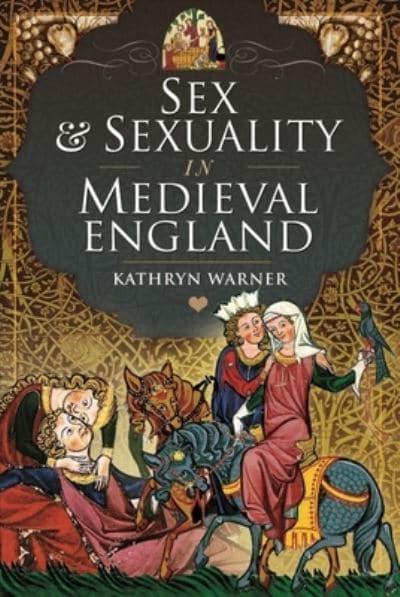
5.  Sex and Sexuality in Medieval England, again by Kathryn Warner.  Previously blogged about this book.

6.  Crown and Sceptre by Tracy Borman  A concise but packed with research on British monarchs.

7.  Henry VIII in 100 Objects by Paul Kendall - objects range from portraits, palaces, tombs and documents, packed with fabulous photographs and descriptions and explanations.

8.  ‘‘Twas the Night before Tudor Christmas’ by Laura Loney.  Bought for me as a gift, this is a mixture of fun and facts, based around a Tudor Christmas.  There are explanations of Tudor Christmas traditions, craft projects, recipes and explanations of Tudor games.  Loved it!

9.  Matilda by Catherine Hanley - having read The White Ship by Charles Spencer, I wanted to read more on Matilda.   Undoubtedly confined by the expectations of women in the 12th Century, Matilda proved herself a formidable stateswoman and strong leader.  If only she had defeated Stephen of Blois and taken up her rightful position as ruler of England.  We still would have had Henry II and the Angevin dynasty ruling England, but we’ll never know how great a ruler she would have made.

10. Portraits of Shakespeare by Katherine Duncan Jones.  So much discussion and debate about Shakespeare and the authorship of his plays - and even if he ever existed.  Really colourful book looks at representations of William Shakespeare in monuments, sketches and portraits.

Wednesday, 2 November 2022

November 1st 1307, Wedding Day of Piers Gaveston and Margaret de Clare

 November 1st  1307, must have been a happy day for Piers Gaveston, Margaret de Clare - and Edward II.  For Piers, now created Earl of Cornwall, was married into the royal family.  For Margaret de Clare, this was a good marriage.  The second daughter of Gilbert de Clare, Earl of Hertford and Gloucester,  and Joan of Acre, this made her the granddaughter of Edward Ist.  Her husband was the king's favourite and she was now Countess of Cornwall.  Edward II was happy because he had brought his beloved Piers into his own family.  Margaret was only 14, and history does not record her feelings.  But there is no reason to suppose her unhappy at her choice of husband, whatever the relationship between Piers and Edward.  She had been raised to do her duty, and expect a 'good' marriage.  Her husband was handsome, well mannered and graceful - even his enemies gave him credit for these virtues.  Plus of course he was the favourite of her uncle, Edward II, and she herself was now a countess.  So pleased was Edward with the wedding, he gave  £7 in coins to be thrown over the couple outside the church.  These were then distributed to the poor.  This was a well established custom.

I've been reading about marriage customs, shocking abductions of heiresses and forced marriages, including Eleanor, the eldest of Edward II's nieces, and a widow, in 1329, planned abductions with the bride colluding, medieval ideas of sexuality and contraception, and medieval marriage in general.  I've been reading Kathryn Warner's 'Sex and Sexuality in Medieval England', just released.  It's a fascinating read and does what the title says.  I'd highly recommend it.


Monday, 3 October 2022

Ludlow Castle

 In my last blog, I posted about visiting the Shropshire town of Ludlow.  If you love Tudor buildings and history, it's a brilliant place to visit.  Ludlow Castle was used by Edward IV to educate his son, the future Edward V (and one of the ' Princes in the Tower') for his role as king.  A mini court was established there.  The young Edward was at Ludlow Castle when he heard his father had died and he was now King Edward V, and set out on his journey to London to prepare for his coronation.


Henry VII followed his example, and sent his eldest son to Ludlow to establish his own mini court.  When Prince Arthur married Katherine of Aragon in 1501,the young couple were sent there to rule over their mini court.   Arthur died in April 1502, from some sort of plaque - possibly a form of influenza, the sweating sickness.  Katherine herself was ill.  Despite lots of speculation, Arthur was not the sickly prince he has often been portrayed as.  Would Henry VII have risked his son's health by sending him to the wet and cold, damp Marcher lands?  What happened at Ludlow castle would become the centre of Henry VIII's 'great matter'.  Henry questioned the relationship between Arthur and Katherine.  Katherine always maintained she was a virgin.  We will never know.  The following photos are from the apartments of Prince Arthur and Katherine.


From the Great Hall, looking up.   Below, a window seat.


The doorway on the right leads to the private apartments of Prince Arthur.  The tower is known as Prince Arthur's tower.  You can now climb the staircase to enter them.


The newly built viewing platform that overlooks the great hall.


View from the great hall of Prince Arthur's Tower.


Private apartments of Prince Arthur.

Front of the apartments of Prince Arthur and Katherine of Aragon.   The round tower is a separate chapel that has recently had a wooden roof built.

Friday, 2 September 2022

Saint Laurence's Church, Ludlow

 Ludlow is a small town in Shropshire, and it's a brilliant place to visit for anyone interested in medieval and Tudor history.  I've visited it many times.  One of the best places to visit there is St Laurence's Church.  The church is about 800 years old.  Here are my pictures after a recent visit.

Victorian stained glass windows showing Edward V and Prince Arthur, son of Henry VII and Elizabeth of York.
Ludlow was a Yorkist stronghold.  Here is Richard, Duke of York, and his son, King Edward IV.  Again, this is Victorian stained glass.


This is an original stained glass window.
Prince Arthur was sent to Ludlow to rule over the Marches at Ludlow castle, with his own mini court.  It was like an 'apprenticeship'.
Prince Arthur died at Ludlow Castle in 1502.  His body was taken to St Laurence's where his heart end entrails were buried near the altar.  We don't know the precise location, and it seems the box was lost at some point.
The font at St Laurence's is made from a Roman column and is still used.

The entrance to St Laurence's Church.  There are volunteer staff there who are very knowledgeable.