Monday, 18 June 2012

700th anniversary

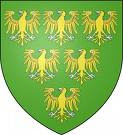
Today, June 19th marks 2012 marks the 700th anniversary of Piers Gaveston’s death.    To mark the anniversary this year, I thought I’d take a look at the inscription on the Gaveston Cross memorial.   My first ever post on this blog was about my search for this monument.  It is a Grade II listed monument, hidden away, and no-one seems to know who the monument actually belongs to.  The monument is made of sandstone and is over 6 metres tall.  It was put up by a local squire called Bertie Greatheed who lived nearby at Guys Cliffe.  I’ve never found out what inspired him to put this monument in place.  If he was an admirer of Piers,  why does it have such an awful inscription on it?  The inscription was written by a local curate and friend, Dr Samuel Parr.  It reads –

In the Hollow of this Rock,
Was beheaded,
On the 1st Day of July, 1312,
By Barons lawless as himself,
PIERS GAVESTON, Earl of Cornwall;
The Minion of a hateful King:
In Life and Death,
A memorable Instance of Misrule.


The date is incorrect and it hardly honours Piers, Edward II or those who set out to kill him, so maybe it was purely the local history of the place, that inspired him.   So for the 700th anniversary, I shall write what I would like to see inscribed.


In the Hollow of this Rock

Was unjustly executed

By over-mighty barons

On June 19th 1312

Piers Gaveston, Earl of Cornwall

Devoted and loyal friend of King Edward II


RIP Piers Gaveston.  I shall raise a glass of wine and toast as usual.


Friday, 8 June 2012

Reflecting on 'don't defame the dead'

There is a very interesting topic being discussed in some of my favourite blogs, started by Kathryn at her brilliantly researched Edward II, and also at the Thomas Cromwell Experience and Neville Feast.  It’s all about ‘Don't defame the dead’.   Edward II, Thomas Cromwell and Richard Neville, Earl of Warwick have all been much maligned in fiction and non-fiction.  It can be easily done because you cannot libel the dead.  And once a historical person is given a reputation, it can sometimes be very hard to shake the perception.    Those with an interest in history will I’m sure make the effort to check so-called facts, sources and interpretations.  Those who merely like a good story, probably won’t, unless their interest is sparked.  A friend of mine always reads the top sellers, whatever their content, and I could hardly believe what she was trying to tell me about Anne Boleyn after reading ‘The Other Boleyn Girl’ by Phillippa Gregory.  I just cannot believe that anyone would think Anne guilty of the charge of incest.   There are so many biographies on Anne, and almost all find her innocent of the charges brought against her – but a work of fiction being quoted at me as evidence of her character was shocking!   Even worse was the film that followed, which those with little knowledge took as ‘the truth’.   You could say that Gregory is entitled to artistic licence and to interpret the history of Anne as she wants, but when I see Gregory on tv speaking as a ‘historian’, the line becomes blurred for me.

I must admit I read very little historical fiction these days.  The main problem is time, and also that there is so much ‘bad’ historical fiction out there.  In my early teens,  way before the internet, I relied on my local library, and read every  Jean Plaidy  novel I could get my hands on.  I always read non-fiction books on the Tudors, but any non-Tudor Plaidy novels I read would always spark an interest and then I’d look for factual books and check her historical interpretation and understanding.    Plaidy relied on Agnes Strickland’s ‘Lives of the Queens of England’, of which there was a complete reference set in my local library and I spent many a rainy day in school holidays ploughing through the volumes.   Of course a lot of what Strickland wrote has been challenged, and rightly so.   I found Plaidy’s novels inoffensive, even when I disagreed with her interpretation.  It was having read Plaidy’s ‘Follies of the King’ which ignited my interest in Piers Gaveston, although it was very difficult to find any history bios on Edward II then, let alone Piers.   I read many fiction books at that time, and was used to the portrayal  of Edward and Piers as being weak, Edward being more or less stupid and being led by the nose by Piers, who was always arrogant and vain and annoyed the hell out of a neglected/vengeful Isabella and paid the price. 

Today’s historical fiction goes much further than Plaidy ever did.   Some of the things I’ve read have bordered on the ridiculous, the bizarre and downright insulting.  In some novels I’ve read how Isabella was abused by her brothers as a child,  Piers was a high – or even low – class whore,  Edward was unbelievably stupid and a rapist who didn’t love his children.   It’s the portrayal of Piers as a prostitute I most object to.  There is NO evidence for this.  Piers is praised in the chronicles of the time as being graceful, well-mannered and chivalrous who actively took part in warfare or tournaments and was seen as a fit companion for the Prince of Wales by no less a person than his father, Edward Ist.  So, whenever Piers is down on his luck, short of money etc, does he enter a rich tournament?  Ask Edward for some money?  Or even ‘steal’ Edward’s wedding presents?  Ask his family for money?  Sell his horse or fine clothes?  Indulge in a bit of piracy?  No, he sleeps with anyone for whatever coin he can get.    Apparently this is all to do with him being raped as a child.  Poor Piers ends up getting raped by Edward and Warwick’s men when he is imprisoned in the same novel.   I wonder where the source for this evidence comes from?  Is there a book out there entitled ‘Knighthood and Prostitution in Medieval times’?   or maybe ‘Warfare and whoring’?   

The nature of the relationship between Piers and Edward II may never be known – unless Piers’ diary is secretly out there somewhere.  It is open to interpretation by novelists.  But as the novelist Susan Higginbotham said on Kathryn’s blog, and I hope she doesn’t mind me re-posting it here –

I think there's responsible gap-filling and irresponsible gap-filling. For instance, it's beyond dispute that something happened to Richard III's nephews. A novelist writing about Richard is going to have to come up with some solution to the mystery (unless he or she chooses to leave it unsolved, which for me as a reader would be off-putting).

But there's irresponsible gap-filling--as in a novel I read where the author invents an episode where Lady Jane Grey is raped by her father, and then uses this supposed rape, which is not supported by a shred of historical evidence, to explain some of Jane's actions later in the novel.

I totally agree with what Susan is saying, and I have read her novels and thoroughly enjoyed them, and there are times I may disagree with her historical interpretation, but I accept why she has written it and more importantly, I have never been offended by anything she has written. 
Many thanks to Kathryn for this wonderful 'card' which I hope she doesn't mind me re-posting - it says it all for me.


Sunday, 20 May 2012

Anniversary of Anne Boleyn's execution

The 19th of May is the anniversary of the execution of Anne Boleyn, and this year I managed to make my way to the Tower of London for the date.  I visited the chapel of St Peter ad Vincula on 2 of the Beefeater tours, and then when it was opened to the public after 4.30pm.  I saw the famous basket of roses that arrives every year - no-one knows who from.  Other people had also brought flowers to lay on Anne's grave.  The flowers increased as the day went on.  I enjoyed meeting some of Anne's 'fans', and although it's not allowed, I'm afarid I did sneak a quick photo.  Sorry!

Friday, 18 May 2012

Dark forces?

I had intended this post to be about the surrender of Scarborough castle by Piers Gaveston  on May 19th.  I wanted to look at Paul Doherty's novel 'The Darkening Glass' (the third in his 'Mathilde' novels) and his idea that there was a 'dark force' at work.  Unfortunately, there is an even bigger dark force at work, and not in 1312, but 2012.  Kathryn, who runs the Edward II blog, alerted me to an article that appeared in the Daily Telegraph by the 'historian' Dan Jones.  Dan Jones has written an extremely heavy book entitled 'The Plantagenets'.  Tackling such a huge project has, I'm afraid, let Dan Jones - known for his 'sexy writing' - rely on some of the same old stories that have been reproduced over the years, if the article in the Daily Telegraph is anything to go by.  Here is the link -

http://www.telegraph.co.uk/history/9264564/Piers-Gaveston-bending-the-monarchs-ear-and-will.html

We get the usual tales of Edward wanting to give away his lands and being assaulted by his father, Edward giving Piers a 'royal' title that was promised to his younger half  brothers,  Piers taking all the wedding presents for himself, blah, blah, etc.  Oh, and Isabella is the 'much-maligned Queen'.  But Jones seems to go a step further.  Piers was credited as being graceful, good-mannered, chivalrous etc - a good role model for Prince Edward - but Jones says this was all a 'facade' - and that Piers introduced Edward to the unaristocratic pursuits of swimming, rowing, thatching - yes, Piers, who is never mentioned as enjoying these pursuits himself or introducing them to Edward.  The real Piers Jones tells us, was 'was arrogant, haughty, grasping and immature'.  He may well have been over-confident and displayed arrogance - but does that mean he couldn't be graceful?  well-mannered?  Looking like the god Mars at the coronation?  active in tournaments?  What surely could Edward have seen in someone so awful?  Jones seems to think it could have possibly be lust.

Other things that irked me were when Jones admits the wars with Scotland were inherited and expensive - and then slams Edward for not pursuing them.  The must ridiculous statement, in my opinion, is this one -

 The French king was a cruel persecutor of heresy who would not have allowed his little girl to marry a sodomite.

Erm, Philip was a medieval monarch, and as such would have wed his 'little girl' (a rather emotive way to describe Isabella) to whoever it suited him to.  And following this theory, if Edward and Piers were lovers, that it can only have been so after Edward was married, unless they were terribly discreet - but surely Philip would have had an inkling when Piers was left as regent, and the fact Edward Ist had banished him.  And talking of banishment, Jones says Piers  ' had repeatedly breached orders exiling him from England.'  Not true.  Edward ist banished him, the new King Edward II recalled him.  After he was banished a second time, Edward did all he could to get the barons to allow Piers back - which they did.  It was only after the third banishment Piers returned illegally from exile.

The only good thing about the article is that it refutes the claim that Edward was murdered with a red hot poker.  That's the only 'good' thing I can say about it.  I ordered the book on Amazon and it arrived yesterday.  I am not looking forward to reading it.

Saturday, 14 April 2012

So what happened at the coronation banquet?

In my previous post, I looked at the coronation of Edward II and Piers, oops, I mean Isabella.   Piers had played an important role in the coronation, and it seems he had been in charge of the banquet that followed the coronation.   Isabella’s family included her uncles, Charles de Valois and Louis d’Evreux, as well as her brother, the future Charles IV.  Wearing royal purple seems to have upset many there, even if it did make Piers look like the god Mars.  The rest of the nobles ‘made do’ with cloth of gold.  Also offensive were the tapestries on show.    These had been specially made for the banquet, by the upholsterers John Engayne and John le Tapyter and cost £5.  They showed the emblems of England – Edward’s – and those of the Earl of Cornwall – Piers.  Doubtless the emblems of Isabella were displayed somewhere.    What totally out-raged Isabella’s family was the fact that Edward preferred to share Pier’s couch rather than Isabella’s.  They were disgusted and humiliated.  No doubt they encouraged Isabella, who was only 12, to feel likewise.  If, as Pierre Chaplais says, Edward was showing to the court, and the French in particular, that Piers was his ‘adopted brother’, why should they be out-raged?    Edward choosing to share his ‘brother’s couch’ could not have caused such offence.    It’s my opinion that Edward and Piers chose to show all those present, English and French, the exact nature of their relationship – that they were lovers, and that any marriage and alliances were secondary to them.    Edward would have wanted Piers to share in his special day, and no doubt Piers would have wanted to show all how important he was to Edward.   It might have been tactless,  and unchivalrous towards Isabella – but surely the French must have had some idea of the relationship between Edward and Piers, and marriage to a 12-year-old wasn’t going to change it.  There would be no deceit or denial for Isabella and her family. 

If only the chroniclers had detailed the exact behaviour of Edward and Piers!  Instead, all we are told is that Piers was very arrogant – and maybe it was his intention, to show no marriage alliance would come between him and Edward – and that one of the nobles was furious at the behaviour of Edward and Piers and ‘allegedly’ swore to kill Piers.  Added to that, the food didn’t taste very nice and some of it was burnt, although I’m sure this didn’t upset those present as much as Piers and Edward’s behaviour.   The Vita says ‘now for the first time nearly all the earls and barons of England rose against Piers Gaveston’ as a result of what happened at the banquet.  Maybe the English nobles had been bidding their time, waiting for a chance to attack Piers, and the complaints of the French gave them the excuse they wanted.   They may have been genuinely out-raged by Piers and Edward’s antics – whatever they did in private was acceptable, but flaunting it in front of the court, and Edward’s new bride and her family was just too much.  Or maybe Piers had grown far too proud.   If Edward and Piers were lovers, surely the nobles would not expect the 12 year-old Isabella to ‘change’ her husband’s nature?   And if they did believe this was possible, then surely they must have already tried to do this by exposing him to various court beauties.   But they knew the king had an illegitimate son, Adam, and that doing his duty would not be a problem for Edward.   In my opinion, it must have been how Edward and Piers had acted at the banquet,  and the nobles felt that Edward had not only humiliated Isabella and her family, but themselves and the dignity of the crown of England.   And I haven’t even started on Edward 'giving' all the wedding presents to Piers!

Sources –
Chaplais – Piers Gaveston, Edward II’s Adoptive brother
Hamilton – Piers Gaveston – Politics and Patronage in the reign of Edward II
Seymour Phillips – Edward II
Helen Castor - 'She-Wolves'

Monday, 9 April 2012

The Coronation of Edward II

The coronation of Edward II took place on Sunday, February 25th, 1308.  The king had just returned from France on February 7th, where he had married the 12 year old Isabella, daughter of the king of France.  He had left his kingdom in what he considered safe hands – Piers Gaveston had been left as Regent.  It seems this had been unopposed by the nobles.  Now the coronation loomed.

 It was obvious Edward wanted Piers to play a major role.  Invitations had been sent out on January 18th, and the Coronation was due to take place on February 18th.  It was delayed until February 25th. The St. Paul’s annalist speculates that this may have been due to attempts by the English and French nobles to oust Piers from a primary role in the ceremony, and refers to him and Edward as ‘two kings reigning in one kingdom, one in name and the other in deed’.  It’s ridiculous to think that either the English or French nobles honestly expected Edward to be passionately in love with his 12 year-old bride.  So why did they object to Piers playing a central role?  If, as Chaplais puts forward, Edward and Piers behaved as ‘adopted’ brothers, why should they care?  Piers had been accepted as Earl of Cornwall at the start of Edward’s reign, been married to Edward’s niece, Margaret de Clare and acted as regent.  So why the furore over Piers taking a primary role at the coronation?  In my opinion, the French nobles had become aware that the relationship between Edward and Piers was more than ‘adopted’ brothers, it  was in fact sexual.  Perhaps the fact that the king’s male lover was to play a primary role caused them to stir up trouble with the English nobles.   If Edward had had a mistress, she no doubt would have been hidden away from court and as a female played no part in the coronation.   As far as Edward was concerned, there would be nothing more pleasing than to have Piers play an important role in the ceremony.   Piers may have wanted the French to be in no doubt of his importance to Edward, and may have acted in an arrogant way.  OK, I concede he must surely have!  Seymour Phillips in his biography of Edward II compares the chroniclers to the tabloids of today, and that there began a ‘feeding frenzy’ of tales about Piers from this time – his arrogance, stealing from the royal treasury and sending money to Gascony – all of which were inaccurate.   It seems the delay for the Coronation may have been caused by the nobles seeking to curb Edward’s excessive reliance on Piers and Edward promised to address this at a later parliament.  However, Edward got his way and Piers took on a primary role in the ceremony.   Dressed in royal purple and pearls, the St Paul’s Annalist describes him as "so decked out that he more resembled the god Mars than an ordinary mortal".  I LOVE this description of Piers! 

So, apart from looking like the god Mars, what role did Piers play in the coronation?  He was given the task of carrying the crown of St Edward, and later taking possession of the Curtana sword – the sword of St Edward, which had been carried by the king’s cousin, the Earl of Lancaster.  Piers then fastened the spur on the king’s left foot.  Philip IV’s brother, Charles de Valois, fastened the right spur.  It must have been Edward’s idea that Piers be given these things to do, and no doubt, Piers was honoured and only too keen.

If what happened at the ceremony outraged both French and English nobles, it got worse at the banquet.  That will be the subject of my next post.

Sources –

Chaplais – Piers Gaveston, Edward II’s Adoptive brother

Hamilton – Piers Gaveston – Politics and Patronage in the reign of Edward II

Seymour Phillips – Edward II

Friday, 2 March 2012

Helen Castor's 'She Wolves'

For those who enjoyed Helen Castor's book 'She Wolves - England's Early Queens', the BBC has her presenting 3 documentaries on the subject.  They will be shown on BBC 4, on Wednesdays, starting Wednesday, March 7th, at 9pm.  The first show will feature Matilda and Eleanor of Acquitaine.  I'm looking forward particularly to Isabella, Edward II's queen, being featured.