Thursday, 20 February 2014

On this day.......


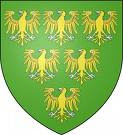
In my last post, I dealt with the birth of Piers Gaveston’s daughter Joan, probably on January 12th.   Joan’s mother was of course Piers’ wife, Margaret de Clare.  February 20th is the anniversary of Margaret de Clare’s, ‘churching’. 

The ‘churching’ of a woman was an important occasion and a time of celebration.  It was a thanksgiving ceremony that took place 40 days after the birth of the child – a sort of thanksgiving ceremony for the survival of the mother.  Even if the child did not survive it was still expected the mother would be ‘churched’. 

In pre-Reformation days, it was the tradition in Catholic England for women to carry lighted tapers when being churched.  This was symbolic in that it alluded to the Feast of the Purification of the Virgin Mary. At her churching, a woman was expected to make some offering the church. 

Margaret would have followed the tradition, waiting 40 days until she re-appeared in public – and be allowed back to worship in Church.

Not surprisingly, Edward II was delighted with the birth – especially as it meant that it brought Piers back to England.  And of course, Joan was his great-niece.  For Margaret’s ‘churching’ he spent the equivalent of £40 on celebrations, which included minstrels.   Queen Isabella also attended.  It must have been a very happy time for Edward and Piers – little did they know what tragedy lay ahead in June of that year.

Friday, 10 January 2014

January 1312 - birth of Joan Gaveston


During the second week of January, Margaret de Clare, wife of Piers Gaveston, gave birth to their first and only child, a daughter named Joan.  She was named Joan after Edward II’s sister, Joan of Acre, who was the mother of Margaret de Clare.  At the time of her birth,  Piers was enduring his third banishment from England, imposed by the nobility on Edward II in the Ordinances of the previous year.   Joan was born in York, and doubtless Piers desperately wanted to see his wife and newborn daughter.  Ignoring the Ordinances, Piers returned to England (although there is speculation that he had actually never left, and that he merely laid low somewhere in England).   It seems Piers saw his wife and child on January 13th.  This visit set in motion the chain of events that would end in the murder of Piers.

It’s unknown how long Piers intended to stay.  The choice of Edward II bringing Margaret de Clare to York from Piers' residence in Wallingford, may have been to keep Piers and his wife and child as far away as possible from his enemies, and give them as much time together as possible.  Piers could have taken his wife and child with him back into exile.  However, Edward II thought differently.  Less than a week later, on January 18th, Edward  declared that Piers was a loyal friend and restored his title Earl of Cornwall. 
 It’s intriguing to think about what Edward and Piers discussed during that period.  Indeed, did they make plans for a more permanent return from exile before Piers even began his exile, and arrange his return when his wife gave birth?  Did he actually ever leave England? Or did Edward persuade Piers to stay only when he met him in January 1312?  Or maybe it was Piers who asked Edward to allow him to stay?  It’s something we’ll never know, and I have to wonder if both Edward and Piers knew how serious the situation was.  Giving Piers his title of earl of Cornwall back was highly inflammatory.  Whatever their plans and thoughts,  Piers was surely delighted to be re-united with his wife and see his baby daughter, as no doubt Margaret de Clare was pleased to see him.

Thursday, 2 January 2014

The best reads of 2013

There were no new non-fiction books on Edward II in 2013.  And the discovery of Richard III’s remains meant that for once the huge influx of books on the Tudors was seriously challenged by the White Rose.  As usual, my best books list includes very little historical fiction.  Despite there being a few novels featuring Isabella, wife of Edward II, I wouldn’t recommend any of them.  The only fictional book to make my list is – 

1.     Towards Auramala: The mystery of King Edward II's fate by Ivan Fowler.  I won’t give too much to away, suffice to say it gives an interesting account of the possible survival of Edward II in Italy.

2.     ‘In the footsteps of Anne Boleyn’ by Sarah Morris and Natalie Grueninger is a must for anyone interested in Anne Boleyn but especially for those to whom she is a serious interest.  The book plots all the known places visited by Anne Boleyn throughout her life, from the obvious, such as Hever castle, and the less well-known Thornbury Castle.  It’s a fascinating read and has some superb pictures, some of them taken personally by the authors. 

3.     ‘Bosworth: The Birth of the Tudors’ by Chris Skidmore.  I bought this book at the BBC Talk Tudor day, an event at which Chris Skidmore spoke.  It gives an insightful build-up to the battle of Bosworth and the early life of Henry VII.  Once again, the use of personal photos by the author is a welcome addition. 

4.     The Woodvilles: The Wars of the Roses and England's Most Infamous Family, by Susan Higginbotham.  I was really looking forward to reading Susan’s non-fiction book on the Woodvilles and she didn’t disappoint!  As well as examining some of the off-repeated stories about the Woodvilles – for example, plundering the royal treasure – I particularly enjoyed Susan’s research into Anthony Woodville – his character and patronage. 

5.     The Creation of Anne Boleyn: A New Look at England's Most Notorious Queen by Susan Bordo.  Not the usual run of the mill biography of Anne Boleyn.  Instead, Bordo takes a look at the original primary sources and the motives of those who wrote them, and how these sources shaped the perception of the roles allotted to Anne Boleyn throughout history.  The book then looks at the portrayal of Anne in fiction and media such as the cinema and TV.  I particularly enjoyed the interview with Natalie Dormer, who played Anne in the recent TV series ‘The Tudors’. 

6.     Tudor: The Family Story by Leanda  De Lisle.  Very well-written and researched.  I particularly enjoyed reading about Margaret Beaufort.   

7.     OK, this is a book that should be split in half.  The King's Grave: The Search for Richard III by Philippa Langley and Michael Jones.  Undoubtedly the discovery of the burial place and remains of Richard III has to be the history story of the year.  The part of the book which focuses on the search for Richard’s grave is very interesting and readable – the research of John Ashdown Hill, raising the funds for the project, the explanation of the dig itself, the matching of the DNA.  Alas, the part which deals with the history of Richard III himself is woeful, and once again it is a defence of anything Richard was accused of and demonising that horrid Henry – Tudor, that is.  So we get the tale of poor Richard having to endure the killing of his father and elder brother Edmund, who just might have been killed after the battle of Wakefield, whilst the death of the Lancastrian Prince of Wales, Edward, son of Henry VI, is given during the battle of Tewkesbury – despite there being more than one source that says he was killed afterwards.  The brutal slaying of Hastings is smoothed over with continuous referrals to how Richard honoured him (yes, really), by allowing him to be buried in Windsor as he requested.   Richard is traumatised by the possible rape of his mother Cecily by Lancastrian supports, but Henry Tudor is a coward at 12 years old for fleeing the battle in which Lord Herbert, his guardian, is captured and killed.  At the battle of Bosworth, Henry Tudor is the luckiest man ever to enter the battlefield – the word is used repeatedly – and Henry is again accused as a coward for hiding behind his pike-men – who luckily are using the best in pikes!  Richard isn’t reckless in his charge towards Henry – he’s so chivalrous he believes in fighting Henry hand to hand.  I have to wonder where he learnt this chivalry – from his brothers, Edward IV and George, Duke of Clarence?  I hardly think so.  Excellent role models in ruthless ambition. Even admitting that Richard more than likely killed ‘the princes in the Tower’, does not alter the extreme bias of this part of the book.  It’s such a shame.  Richard III was a man of his times – and those times were violent.  He was not the monster of Shakespeare – although I am amazed that anyone would think Shakespeare a historian rather than a play-write.  A far more balanced book should have been produced.  Richard doesn't need another saintly defence of his character.  Rather, he needs a more balanced approach and his life needs to be looked at in the context of his times.

Tuesday, 24 December 2013

A Very Merry Christmas to all!


Looking forward to a new year with all my favourite blogs - Kathryn's addictive Edward II (whose posts have changed from Thursday to Sundays now - yes, I noticed the difference! ), Kasia's The Young King which has renewed my interest in the Anjevins, and Gabriele's informative posts about periods of history I know little about and always has the best photos.   Keep on blogging in 2014!

Sunday, 22 December 2013

A little bit of festive fun....


A few years ago I did a spoof post dedicated to Piers Gaveston’s 12 Days of Christmas, in which he listed all his presents from Edward II  here, So this year, it’s Edward’s turn to list his presents from Piers, who obviously doesn’t have as much money as Edward but knows him really well!

On the first day of Christmas, my true love, Piers, sent to me a miniature portrait of himself – how thoughtful of him, as he knows how much I love to gaze upon him.

On the second day of Christmas, my true love, Piers, sent to me a rather rude joke about Thomas of Lancaster inside a cracker – hilarious! And too rude to repeat here!

On the third day of Christmas, my true love, Piers sent to me a book entitled ‘Thatching Made Easy’ – he’s just so thoughtful!

On the fourth day of Christmas, my true love, Piers sent to me some soothing hand balm, to use after a hard day’s thatching.  How sweet of him!

On the fifth day of Christmas, my true love, Piers sent to me the bill for his new purple silk tunic.  I don’t mind of course – purple does suit him so well, and purple silk is just so expensive – especially with ermine trim.

On the sixth day of Christmas, my true love, Piers sent to Isabella the wrong directions for Langley, which means she arrived the day after Boxing Day.  I know I shouldn’t laugh, but, well, I just can’t help it!

On the seventh day of Christmas, my true love, Piers, sent to me a dog collar for Guy of Warwick – ok, a bit cheeky, but surely Guy can take a joke.

On the eighth day of Christmas, my true love, Piers, sent a matching dog tag for the collar, with Guy inscribed on it!  Guy seems to have lost his sense of humour!

On the ninth day of Christmas, my true love, Piers, sent to me a fine pair of oars, with the royal crest on them.   He says he’s looking forward to me using them, rowing for all I’m worth, shirtless, down the Thames with my muscles on view! 

On the tenth day of Christmas, my true love, Piers, sent to me a poem about said muscles.  It must remain private I’m afraid.

On the eleventh day of Christmas, my true love, Piers sent to me some forks which he says are for eating pears.  I think it’s another of his jokes.

On the twelfth  day of Christmas, my true love, Piers sent to me the key to his room – so I’m off now to find him!  Merry Christmas!


Monday, 2 December 2013

The tomb of Arthur Tudor, Prince of Wales

I've visited Worcester Cathedral many times, and always like to spend some time in Prince Arthur's Chantry.  It is a magnificent piece of architecture for a young man who promised so much and died early.  He's mostly remembered today for his short marriage to Catherine of Aragon, who went on to marry his younger brother after Arthur's death.  The nature of their marriage became very important later in the reign of Henry VIII, when he divorced Catherine on the grounds the marriage of Arthur and Catherine having consummated their marriage.  This discussion still continues today.  Here's a link to my earlier post on Arthur - who was far from the sickly youth portrayed in later generations.

Arthur Tudor, Prince of Wales

Here are the pictures from my latest visit.  One of the figures surrounding the Chantry is allegedly Edward II.  The figures were defaced in the reign of Henry VIII's son, Edward VI.

 The chantry itself was constructed away from the cathedral and installed on top of previous tombs.


 The defaced figures inside the chantry - which one is meant to be Edward II?

 Prince Arthur's tomb.  Recent research has discovered the vault beneath the chantry where Arthur's remains are buried.  It's a 'double vault', but contains only one set of remains.  There was no effigy - it's likely the tomb had a brass placed on top of it.
 A copy of the original window from Malvern Priory.  This copy was added in 2002 to commemorate the 500th anniversary of Arthur's death.
 Taken from the chantry, this tomb is for Gruffydd ap Thomas and his wife.  Gruffydd asked to be buried near the prince he so loyally served.  The tomb also contains the remains of his wife.

The brass on top of the tomb of Gruffydd ap Thomas is a copy of a lost original.

Friday, 1 November 2013

Much more important, Novemeber 1st

is the anniversary of Piers wedding to Margaret de Clare, the niece of Edward II in 1307.  It's also Kathryn's 500th post on her fabulous blog Edward II.   Congratulations Kathryn and thanks for all the well-researched and fascinating posts!