Thursday, 14 April 2022

Princess Nest

Following on from my St David's Day post and Pembroke Castle, here's a tale from another  Welsh castle,  Carew about Princess Nest.  She was the daughter of the Welsh Prince Rhys Ap Tewder, who died in 1093.  Nest spent time at the court of Henry Ist, and bore him a child, a son.  She then married Gerald De Windsor, an Anglo Norman Lord.  He was given land at Carew and together they began to build the first castle.  

Nest was considered the most beautiful woman in Wales, and there were many who admired her beauty.  Despite being married to Gerald - she bore him 5 children - she was desired by others, including the Welsh Prince Owain ap Cadwgan.  In a daring attack on the castle, he set it alight and captured Nest.  Her husband escaped via a garderobe, aided by Nest.  It may have been that Nest wasn't that distressed by being captured by Owain.  She was finally rescued some 6 years later - and with 2 new children by Owain  - by her husband and Owain was killed.  Gerald died the following year and Nest married again, and had more children.  In all, it is thought she had about 20 children.  She sounds a fascinating character and died in 1136.   The earliest part of Carew Castle, where Nest sheltered when the castle was under attack, can still be seen at Carew today.  It would have been painted white with limestone when first built, as a reminder of the power of Norman rule.

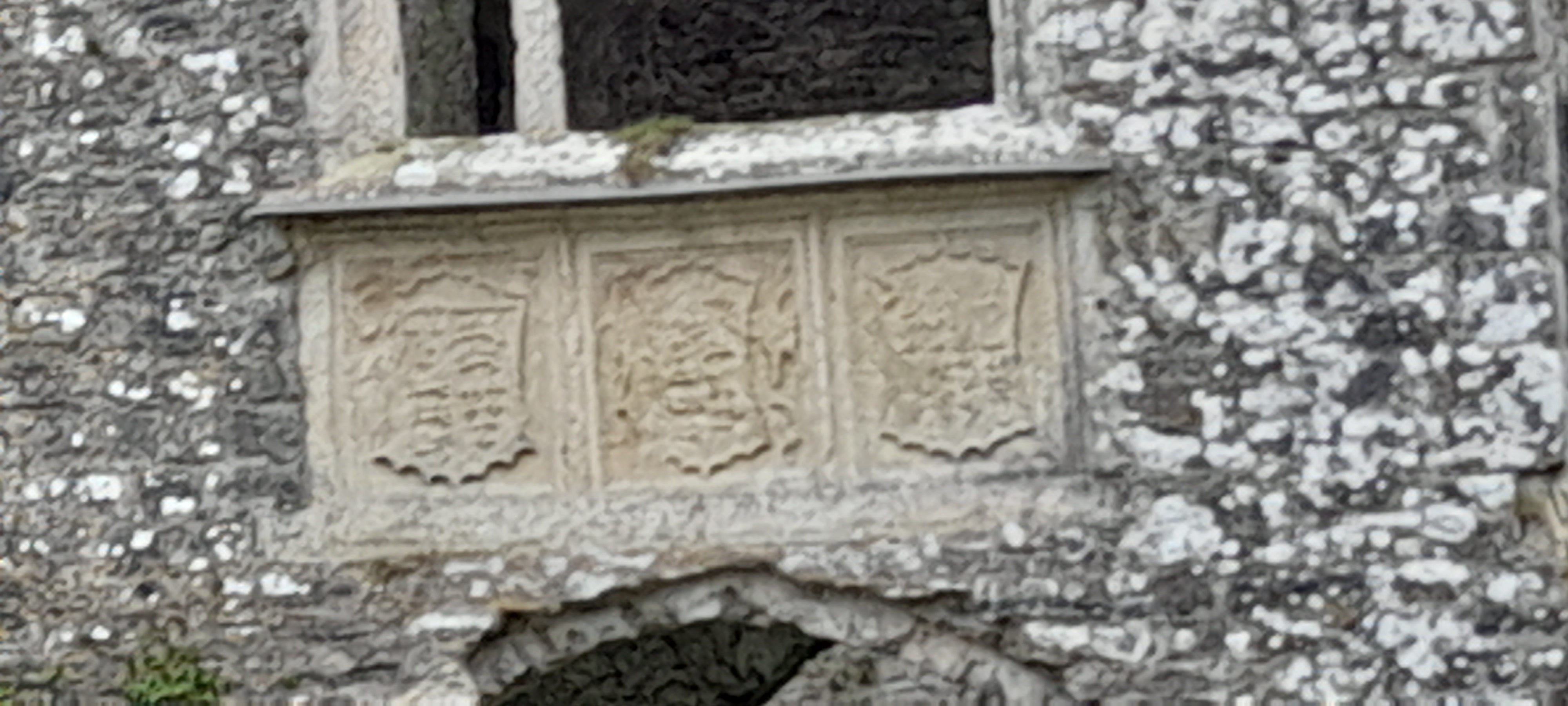
I've posted about Carew Castle before.  It was the home of Sir Rhys ap Thomas, the 'man who killed Richard III'.  It's a hidden gem of a castle.  From it's beginnings with Princess Nest, it's continued fortifications, and then it's turn around from defensive castle to luxury manor house, it's all to be discovered.  Henry VII even visited Carew for a celebration tournament hosted by Sir Rhys and you can see the arms of Henry VII and Prince Arthur still.


Carew was built by a river and the coastline in South Wales, thus ensuring a supply link if the castle was ever beseiged.  The original part of the castle, built by Nest and her husband, can be seen as you enter the castle.  Nest was beseiged as she sheltered with her children in the room above the drawbridge.
One of the impressive towers at Carew.
Once the civil wars ended in 1485, Carew began alterations to turn it into a 'home'.  New windows and frames were put in.
The garderobe from which Nest's husband is supposed to have escaped from.


Sir Rhys ap Thomas welcomed Henry VII to the castle.  You can see the original coats of arms still intact.

The doorway underneath the arms leads to the impressive new great hall built by Sir Rhys.


Tuesday, 1 March 2022

Celebrating St David's Day with Pembroke Castle

 Wales is often called the land of castles, and an awful lot of them were built by Edward 1st.  However, they had always been hill forts, wooden castles and hunting lodges built in Wales long before.  One of the oldest castles in Wales, and the birthplace of one of my favourite Kings, Henry VII, is Pembroke Castle.  It is a fabulous castle to visit, and has a magnificent round, stone keep built by William Marshall.  There is also the Henry VII Tower, where legend says 13 year old Margaret Beaufort gave birth to her only child, Henry Tudor, although it's more likely to have been the manor house built inside the castle grounds which no longer stands.


The fabulous round keep at Pembroke Castle.  In front is a map showing the castles and dates of when they were built.  There's a key that tells you which castles were built by the Normans, the Welsh Princes and Edward 1st.
View of Henry VII Tower from outside.

Inside the stone keep, which still has it's roof.


Plaque commemorating the birth of Henry VII.


Saturday, 5 February 2022

A New Year, but same old myths.......

 As I'm sure a lot of people did, I got quite a few books for Christmas, and am making my way through them.  I'm currently reading Sarah Gristwood's 'The Tudors in Love'.  I've read a few of her books, and really enjoyed 'Game of Queens'.  The start of 'The Tudors in Love' sets the scene over a few chapters about the history of 'courtly love'.  We are taken back to the time of Eleanor of Aquitaine and her daughter Marie of Champagne.  It's not long before we arrive at the court of Edward II and his Queen, Isabella.  And this is where I start to question what has come before, and what will come after.  Because Gristwood, while acknowledging the age difference between Edward and Isabella - he was 23, she was 12, she resorts to using those old myths, and one in particular - that Edward gave everything that belonged to Isabella to Piers.  Not much courtly love for Isabella then.  Gristwood says Edward gave Piers the 'position and property' that belonged to Isabella.  From this, I suppose it to be the so called 'wedding presents'.  This is a myth that has persisted for many years - but can be found in no contemporary account.  Kathryn Warner, in her excellent Edward II blog, traces it back as far as the  'historian' Agnes Strickland in her series 'Lives of the Queens of England', written between 1840 to 1849.  Previously Strickland had written historical romances and poetry.  Aged about 12, I used to read her series on the Queen's of England in the reference library on Saturday afternoons, and devoured every bit, and believed it all.  Then I grew up and realised what she was writing was not 100% true - quite often no-where near it!  Unfortunately, some of these embellishments have 'stuck' in historical writing and been repeated.  Strickland lists the gifts given to Edward from his new father-in-law Phillip - not wedding gifts, but gifts.  Then adds Edward 'immediately' gives the gifts to Piers, whose love of finery was 'insatiable'.   I daresay it was, knowing Piers 😃 Strickland goes on to say it was all calculated and designed to humiliate the young Queen - giving Piers the jewels of her descendants.  Strickland quotes Matthew of Westminster as her main source, before adding her own embellishments.  It seems Matthew of Westminster never really existed, but was a collection written by several monks.  Kathryn Warner in her post here - Edward II Myths - thinks the myth all started with the Annales Paulini.  It was reported that King Philip gave Edward 

a ring of his kingdom, the most beautiful bed (or couch) ever seen, select war-horses, and many other extravagant gifts.  All of which the king of England straight away sent to Piers 

Doesn't quite fit the bill of Piers taking control of all Isabella's jewels as an infatuated Edward looks on and is thinking what a great way to humiliate his 12 year old wife.  Edward sent the gifts to Piers, not gave them.  Piers, with the backing of the nobles, had acted as Regent while Edward was away marrying Isabella.  Who better to take charge of the gifts and keep them safe?  Edward clearly hadn't trusted anyone else to act as Regent while he was away - but he did trust Piers.  

It's such a shame that in a history book published in 2021, continues to propagate this myth. And even worse, the story of the 'red hot poker' is mentioned further on!  Piers Gaveston had no need to take 'the position and property' of Isabella.  She was 12 years old, she was no threat to his position, and he had riches of his own.  Humiliating and provoking a 12 year old girl was not on Edward and Pier's 'to do' list - there was no need to.  

Wednesday, 5 January 2022

Best Books of 2021

 As is usual for me this time of year, here are my ‘best reads’ of 2021.  Been a bit of a struggle for me in 2021, as I know it has been for many people.  It’s times like this that had me reaching for some old favourites.  So here is my list, in no particular order, of the best books I read in 2021.

1.  The White Ship by Charles Spencer.   A period of history I knew very little about.  It concerns the only legitimate son of Henry 1st who drowned on a crossing from France to England aboard the White Ship.  The tragedy had a huge effect on the line of succession, plunging England into civil war.  

2.  ‘The Life and death of Anne Boleyn: The Most Happy’ by Eric Ives.  Quite simply the best book ever written about Anne Boleyn, no matter how many times you read it.  Never been bettered.


3.  ‘The Daughters of Edward 1st’ by Kathryn Warner.  Again, I knew very little about the lives of these fascinating women, which is typical of medieval women.  I often think of Edward 1st as the controlling, bullying father of Edward II.  But where his daughters were concerned, he was an indulgent and doting father.  Their stories were not quite what I was expecting.


4.  ‘The King’s Painter, The life and times of Hans Holbein’ by Franny Moyle.  Exactly as described.  A superb look at the life of Henry VIII’s painter, Hans Holbein and his extraordinary, detailed portraits.  


5.  ‘Henry VII and the Tudor Pretenders’ by Nathan Amin.  A look at the 3 pretenders who threatened Henry VII’s new reign - Lambert Simnel, Perkin Warbeck and Edward, Earl of Warwick.  I’ve previously read boooks on Perkin Warbeck but knew very little about Simnel.  The inclusion of the Earl of Warwick is a tragic tale of a miserable life, a young man imprisoned through no fault of his own and subject to the treacherous plans of others.

6.  ‘The Song of Simon de Montfort’ by Sophie Therese Ambler.   I knew practically nothing about Simon de Montfort and decided to purchase this book as a starting point.  Ambler’s detailed and meticulous research of Simon and his family is excellent.  This book is very academic but I learned so much about Simon and his circumstances.  I’d be surprised if there’s a more detailed book on him.

7.  ‘Eleanor of Aquitaine Queen of France and England, Mother of Empires’ by Sarah Cockerill.  The best biography of Eleanor of Aquitaine.  Eleanor was an incredible woman, and would have been whenever she lived.  Queen of France and England, and mother of the Young King, Richard 1st and King John.  Amazing!

8.  ‘Henry VIII in 100 objects’ - by Paul Kendall.  A fabulous collection of photos of objects and places associated with Henry VIII, some well known, others less so, and all in glossy colour.

There were some books I started but didn’t finish, some I wish I hadn’t bothered to finish, and I indulged in re-reading my favourite fictional historical novelist, Jean Plaidy.  Hadn’t read any of her books for years, but still got my copies.  Just fantastic to lose myself in them all over again.


Monday, 1 November 2021

November 1307 - Marriage of Piers Gaveston and Margaret de Clare

 As soon as Edward II recalled Piers Gaveston from exile he set about making Piers part of his family - the Royal family.  The best way to do this of course was marriage.  The bride chosen was Margaret de Clare, the king's niece from his sister Joan of Acre and her husband Gilbert de Clare, Earl of Gloucester.  Piers had been made Earl of Cornwall in August, before his marriage to Margaret de Clare.  What is interesting to note is that Piers' Coat of Arms as Earl of Cornwall already had the arms of the Clare family as part of it's design - before the marriage had taken place.  It seems clear the marriage had been planned for some time.

The marriage itself took place at Berkhamstead on November 1st.  The King himself attended, along with some of the nobility.  Naturally, Edward's generous character was on show.  There's very little mention of the wedding ceremony in the chronicles, but we do know Edward gave £30 of jewels to the couple, gave Margaret a palfrey worth £20, another £20 on minstrels, gifts for her ladies worth £36 and he even arranged for coins worth over £7 to be thrown over the couple at the church entrance.  It must have been a day of great celebration for Edward and Piers, and hopefully Margaret.  Whether her brother approved, we just don't know, but then his sister would now be Countess of Cornwall, and married to the King's favourite.


Saturday, 16 October 2021

Piers Gaveston's First Exile

 Piers Gaveston had been appointed to Prince Edward's household in 1300 by his father, Edward Ist.  It seems Piers was chosen because of his chivalrous attitude and good manners, a suitable role model for the young prince.  Yet in 1307, he was banished by Edward Ist, for an incident described by Walter of Guisborough, the only chronicler who mentioned it.  According to Guisborough, the Prince had asked his father for the county of Ponthieu for Piers.  Or rather he asked his father's treasurer, Walter Langton, Bishop of Coventry and Lichfield, to ask him.  Edward Ist summoned his son, grabbed him by the hair, tearing it out, and yelled 'You wretched bastard, do you want to give lands away now?  You who never gained any?'  He then called his council together and banished Piers from the Kingdom.  Having read this account, you would assume that Piers was promptly marched to Dover and sent on his way.  But this is not what happened.  Edward 1st appears to have calmed down enough to order Piers leave the country three weeks after the next tournament, to return to Gascony, and stay there until he was recalled.  Not the actions of someone who was in such a foul temper, abused his son and ripped out his hair because he thought his son's favourite companion had the audacity to ask for the county of Ponthieu.  The official court records give a different account.  The Prince and Piers were to swear on Holy relics they would respect the terms of the exile.  The exile wasn't even permanent - Piers would be recalled.   Piers was even given time to arrange his exile, and did not even go to Gascony - he actually went to the much disputed Ponthieu.  Neither Piers or the Prince were denied the opportunity to meet up before the exile. Prince Edward accompanied Piers on his journey to Dover.  They even traveled at a leisurely pace.  They traveled with members of the Prince's household and even took along 2 minstrels with them.  The Prince also gave Piers many costly gifts.  He was given a number of expensive tapestries, two costly tunics and 5 horses and a cash gift of £260.  Monies were also given to the members of the household accompanying Piers. Edward 1st promised him 100 marks a year for each year he was in exile.

Even after he had left England, the Prince sent on more costly gifts.  Piers obviously intended to make his exile as comfortable as possible.  It seems he would spend his time entering a number of tournaments and the Prince sent him 2  expensively made tournament outfits - one of green velvet embroidered with pearls and gold and silver piping, and also another outfit in green.  Green obviously suited Piers!  Both were decorated with the arms of Gaveston.  He would make quite a spectacle in tournaments.  Far from leaving England in disgrace, Piers also took with him 2 knights, a chamberlain, 2 falconers , some servants and several grooms from the Prince's household.  Maybe even the 2 minstrels went as well!

It was a very generous exile.  Piers was well supported by his household, had been given lavish gifts by the Prince, with the intention he would busy himself entering tournaments.  At some point, he hoped to be recalled by the king.  Prince Edward had felt the full force of his father's fury - even if the story of having his hair pulled out wasn't true.  So, was the reason for the exile an argument over Ponthieu?  Or was it something else?  Was the King angered by the Prince entering in to some sort of brotherhood pact with Piers?  Or had he realised his son was besotted with Piers?  Did he suspect they were lovers?  And if so, was this the reason for his anger?  Or was it the influence he thought Piers would exert over the Prince?  From the King's actions, it would appear his anger was with the Prince, and not Piers - hence the fine send off he was given - and knowing the exile was not forever.  Perhaps the King hoped Piers would enjoy his life in exile and be content to stay there.  Or that whatever 'hold' he had over the Prince, it would evaporate - out of sight, out of mind, so to speak.  But it was not to be.  Within 3 months, the King was.  His son became Edward II and he immediately set out to bring Piers Gaveston back to England.


Sources - 'Edward II' by Seymour Phillips

'Piers Gaveston, Politics and Patronage in the Reign of Edward II' by J S Hamilton