2 days ago
November 1st 1307, must have been a happy day for Piers Gaveston, Margaret de Clare - and Edward II. For Piers, now created Earl of Cornwall, was married into the royal family. For Margaret de Clare, this was a good marriage. The second daughter of Gilbert de Clare, Earl of Hertford and Gloucester, and Joan of Acre, this made her the granddaughter of Edward Ist. Her husband was the king's favourite and she was now Countess of Cornwall. Edward II was happy because he had brought his beloved Piers into his own family. Margaret was only 14, and history does not record her feelings. But there is no reason to suppose her unhappy at her choice of husband, whatever the relationship between Piers and Edward. She had been raised to do her duty, and expect a 'good' marriage. Her husband was handsome, well mannered and graceful - even his enemies gave him credit for these virtues. Plus of course he was the favourite of her uncle, Edward II, and she herself was now a countess. So pleased was Edward with the wedding, he gave £7 in coins to be thrown over the couple outside the church. These were then distributed to the poor. This was a well established custom.
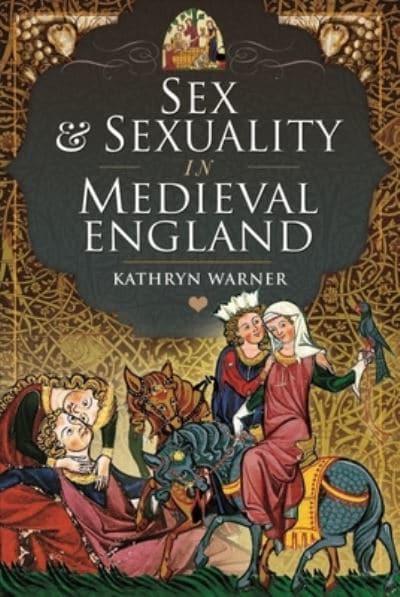
I've been reading about marriage customs, shocking abductions of heiresses and forced marriages, including Eleanor, the eldest of Edward II's nieces, and a widow, in 1329, planned abductions with the bride colluding, medieval ideas of sexuality and contraception, and medieval marriage in general. I've been reading Kathryn Warner's 'Sex and Sexuality in Medieval England', just released. It's a fascinating read and does what the title says. I'd highly recommend it.
In my last blog, I posted about visiting the Shropshire town of Ludlow. If you love Tudor buildings and history, it's a brilliant place to visit. Ludlow Castle was used by Edward IV to educate his son, the future Edward V (and one of the ' Princes in the Tower') for his role as king. A mini court was established there. The young Edward was at Ludlow Castle when he heard his father had died and he was now King Edward V, and set out on his journey to London to prepare for his coronation.

Henry VII followed his example, and sent his eldest son to Ludlow to establish his own mini court. When Prince Arthur married Katherine of Aragon in 1501,the young couple were sent there to rule over their mini court. Arthur died in April 1502, from some sort of plaque - possibly a form of influenza, the sweating sickness. Katherine herself was ill. Despite lots of speculation, Arthur was not the sickly prince he has often been portrayed as. Would Henry VII have risked his son's health by sending him to the wet and cold, damp Marcher lands? What happened at Ludlow castle would become the centre of Henry VIII's 'great matter'. Henry questioned the relationship between Arthur and Katherine. Katherine always maintained she was a virgin. We will never know. The following photos are from the apartments of Prince Arthur and Katherine.


The doorway on the right leads to the private apartments of Prince Arthur. The tower is known as Prince Arthur's tower. You can now climb the staircase to enter them.


Ludlow is a small town in Shropshire, and it's a brilliant place to visit for anyone interested in medieval and Tudor history. I've visited it many times. One of the best places to visit there is St Laurence's Church. The church is about 800 years old. Here are my pictures after a recent visit.


The entrance to St Laurence's Church. There are volunteer staff there who are very knowledgeable.
August 22nd marks the anniversary of the Battle of Bosworth in 1485. The battle was fought between Richard III, and Henry Tudor, Duke of Richmond. Henry was a rank outsider for the crown. He was the son of Edmund Tudor, half brother to King Henry VI through his mother, the dowager Queen Katherine and her second marriage to Owen Tudor, and Margaret Beaufort, descended through the bastard line of John of Gaunt and Katherine Swynford. (They were later legitimised by Gaunt). Recent fiction has done a lot to damage the reputation of Margaret Beaufort, with the idea she was plotting to put her son on the throne during the reign of Edward IV. Utterly ridiculous and of course a work of fiction, but I've had people cite it to me as 'historical fact'. That would make Margaret an incredible woman with the superb gift of hindsight. During the reign of Edward IV, the House of York should have been triumphant in the so-called War of the Roses. Edward had 2 sons with his wife Elizabeth Woodville, and he also had 2 brothers, George, Duke of Clarence, for a while his brother's heir, who also had a son, and Richard, Duke of Gloucester, who also had a son, and then there was their relative, the Duke of Buckingham, with a claim to the throne. However, the House of York destroyed itself, with Edward executing his brother George and alienating his brother Richard to such an extent that following the death of Edward IV, Richard usurped the throne from his nephews, imprisoning them in the Tower of London from which they never emerged. Richard executed Buckingham, his own son died, and there was dissatisfaction at his reign after only 2 years. It was then that eyes turned to Brittainy, where Henry Tudor had been living in exile with his uncle, Jasper Tudor, Earl of Pembroke, to keep him safe from Yorkist plots. All Margaret Beaufort had wanted was to keep her son safe from plots, and that he should have his title Duke of Richmond and live safely in the court of Edward IV. It was only Richard III's usurpation that drove her to plot with Edward IV's former wife, Elizabeth, and arrange a marriage between Henry and the eldest Yorkist princess, also called Elizabeth. Richard III was an experienced soldier from a young age and facing an inexperienced Henry Tudor, (it was Henry's first battle) who was barely known in England, Richard should have been victorious. Instead, the battle was a short one, with Richard making a calamitous mistake which meant he was trapped between Henry Tudor's army and the so far uninvolved army belonging to Lord Stanley, step-father to Henry Tudor, and whose son was being held hostage by Richard III to ensure he fought on his side. Lord Stanley seized his chance and Richard was cut down. This is a well known story, and much has been made of Stanley's so-called treachery, but there was another army, led by the Earl of Northumberland, another supporter of Richard, who also did not engage in the battle.
There is a superb museum at Bosworth, and whilst there is some debate over where the actual battle took place, you can walk the battle trail. I've been there twice, and it is well worth a visit. Every year, on August 22nd, there's a re-enactment of the battle and this year is no different. Check out their website here - https://www.bosworthbattlefield.org.uk/
Here are some photos from my last visit.


I saw this model as a child and was delighted it was still on show in 2018!

If only.......this had happened, or hadn't happened. Many history fans have often thought this. And it's noticeable there are 'alternative' history novels being written. We often wish we could change key events of history. Watching 'Anne of the Thousand Days' for the umpteenth time the other week, I still wished that Anne Boleyn's speech to Henry VIII in the Tower had happened - whereby she tells him that she won't admit her marriage is invalid, and that Elizabeth will make a fantastic Queen, better than any king Henry might produce with any other wife. She then tells him her blood will have been 'well spent'. If only.....but of course, once she was arrested, Anne never saw Henry again, and she could not have known what was going to happen to Elizabeth, but she was no doubt extremely worried about her daughter's future.
Other 'if only' s for me - well, that the Earl of Pembroke, Aymer de Valence, was not desperate to see his wife at Bampton, leaving Piers Gaveston with a small garrison to guard him at Deddington Priory. That would ensure that Guy, Earl of Warwick, didn't storm the Priory and capture Piers, take him prisoner, march him to Warwick Castle and arrange his execution. No doubt Guy had spies, watching Pembroke's movements, waiting for an opportunity to strike. But he may not have got another opportunity. Or maybe he would have challenged Pembroke openly. Piers trusted the honourable Pembroke. If only he hadn't he might have tried to escape. But he had surrendered on favourable terms, and both Piers and Pembroke kept their word.
If only.... Edward II had not allowed his son to join his wife, Isabella, in France, to pay homage for Gascony. Although, hindsight is a brilliant gift, and the events of 1327 could not have been imagined!
If only.....Prince Arthur, son of Henry VII and Elizabeth of York, had lived. Then Henry, his younger brother, would have remained just that! I've often wondered what sort of King Arthur would have made. I've read a coupe of books about him, and visited his tomb at Worcester many times. He had all the makings of a great king - his education and character seem to bear this out. Of course, we'll never really know, but he had a strong sense of duty from an early age, and so much had been invested in him. He had ruled his mini-court at Ludlow with support from a young age. Would he and Katherine of Aragon have had children that survived? Would the Tudor dynasty have survived? Would Prince Henry have remained loyal, or would his Yorkist genes caused rebellious trouble? Of course, had Arthur survived, we would not have had Anne Boleyn, and then Elizabeth 1st, although I'm sure the Reformation would have taken a hold of some sort.
If only....Anthony Woodville had avoided his meeting with Richard of Gloucester and the Duke of Buckingham at Stony Stratford. Although I have the feeling Richard was determined to ambush Woodville and take custody of Edward V wherever he could.
If only.....Edward IV had married Elizabeth Woodville in a ceremony with lots of witnesses. Enough said.
If only....Anne Boleyn had produced a living son. Her position would then have been unassailable. But then we'd have no Elizabeth 1st.
If only Margaret of Anjou had lived long enough to see the defeat of the Yorkists at Bosworth and the start of the Tudor dynasty - the final triumph of Lancaster over York. That would not really have changed history that much, but it would have been wonderful!
There are many other 'if only's in history I could include. The ones I've listed are my favourites.

The Earl of Gloucester, who stood by and did nothing to help Piers, was killed at the Battle of Bannockburn when he recklessly rode into the battle without his colours. It was rumoured Warwick may have been poisoned, but he did not live long enough to enjoy his 'triumph', whilst Lancaster faced the King's revenge and was executed himself, in a parody to what he had done to Piers. The Earl of Pembroke united solidly behind Edward II. At Blacklow Hill, a monument was erected in 1823 to record what had happened there.

Scarborough Castle, where Piers surrendered, May 19th, 1312.