Tuesday, 6 April 2021

Update on Kings Langley Priory

 Thank you to Unknown who left this comment on my blog March 18th.  You can't beat local knowledge and I live in hope of an important discovery one day!


As a resident of Kings Langley I can confirm The Priory was to the north of the Palace, and the Rudolf Steiner school (now closed) was built over the Palace, not the Priory. A section of the Priory is still there! Most of the land around the remaining section of the Priory is allotments and the school car park.


Piers Gaveston - Gascon upstart? Hardly!

 Piers Gaveston was loathed by many at the English court for his friendship and influence over Edward II.  This loathing took several forms, chief amongst them that Piers the son of a low born Gascon knight.  Certainly Piers was born and raised in Gascony - but he was much more than the son of a Gascon knight!  

The relationship between Gascony and the English crown was a complex one.  Gascony was part of the Duchy of Acquitaine.  Acquitaine had been part of the mighty Anjevin Empire, with the marriage between Eleanor of Acquitaine and Henry II of England.  The collapse of the Anjevin Empire during the reign of King John meant the Duchy if Gascony became a thorn in the side of both the French and English kings.  Edward II's father, Edward Ist, held the Duchy of Gascony by being a vassal of the French king, Phillip IV, through the Treaty of Paris of 1259.  EDward Ist had spent some of his youth in Gascony.  Tensions erupted in 1294 between Edward Ist and Philip, and lasted until 1303 when a new Treaty of Paris was signed.  Many Gascons were loyal to the English crown, and one of these was Piers Gaveston's father.

Piers' parents were Arnaud de Gabeston and Claramonde de Marsan.  His father was descended from the leading nobility of Bearn.   Claramonde de Marsan was the daughter of Arnaud-Guillaume de Marsan.  Along with her brother Fortaner de Lescun, she shared the estates of her father, which on her marriage to Arnaud made him a substantial landowner.  Hardly a 'humble knight'. 

The couple had five children - Arnaud-Guillaume de Marsan, Piers, Gerard de Gabaston, Raimond Arnaude de Gabaston and Amy de Gabaston.  His father served Edward Ist for almost 20 years, following him on various campaigns.  This is how Piers came to the English court, along with 2 of his brothers.  Piers first appears in the service of Edward I in Flanders in 1297, where his wages were given as 12d.  His horse was valued at 12 marks.   Piers would probably have been in his teens at this time, and went on to serve Edward Ist , along with his father, in Scotland.  At some point, Edward Ist thought Piers a suitable companion for his son - as a role model, with graceful manners and having proven himself on the battlefield.

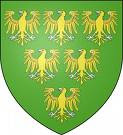
Arnaude de Gabeston died in 1302, and was accorded the honour of being buried in Wichester Cathedral.  His tomb is pictured below.


Source - 'Piers Gaveston, Politics and Patronage in the reign of Edward II' by J S Hamilton.


Monday, 1 March 2021

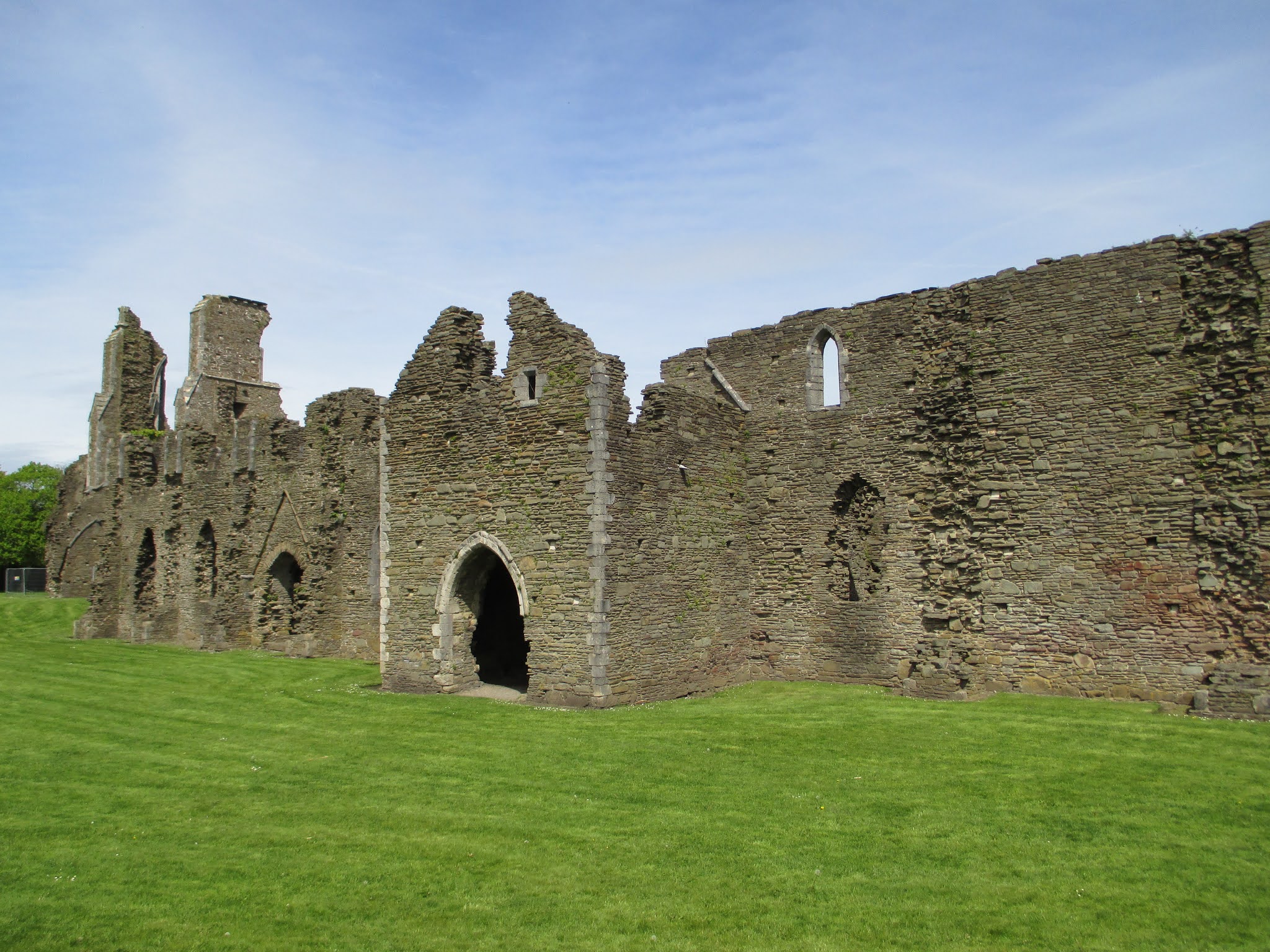
Celebrating St David's Day with pictures of Neath Abbey

 One of the finest ruins in Britain - never mind Wales - Neath Abbey was one of the largest religious houses in Britain.  It was founded in 1130 by the Norman Knight Sir Richard de Granville.   In November 1326 Edward II and his favourite Hugh Despencer  took shelter there, trying to keep one step ahead of Edward's wife Isabella and her army.  It seems Edward had a number of possessions with him, including jewels, documents, armour  and money which were to be sent on to Swansea Castle.  Many of these items 'disappeared' either 'lost' or more likely stolen.  Stories were told of hidden money being discovered in the Abbey.   One of the most important items to tur up was the marriage contract between Edward and Isabella, which turned up in the 19th Century.   Makes me wonder what else is there left to be discovered?

AS far as I know, the Abbey is free to visit - when times allow - and it really is worth a visit.  It's sheer size emphasises the importance of the Abbey, and it is such a shame that it is not as well known as other monastic ruins such as Tintern.  It's profile has been raised as it has been used in tv programmes such as Merlin and Doctor Who.


Tuesday, 2 February 2021

February 1312 - a time of happiness for Piers Gaveston

 February 1312 saw Piers Gaveston experiencing great happiness in his personal life.   Granted, he was supposed to still be in exile, but he was in fact back in England(indeed he may never have left England, merely staying hidden).   This was due to his wife, Margaret de Clare giving birth to their first - and only - child, Joan.  Joan had been born in January, and in February, Margaret followed the tradition of churching, and to celebrate this Edward II spent £40.  No doubt Edward II was just as delighted as Piers at the birth of Joan - it meant Piers returned from exile and the birth of Joan brought Piers closer in family.  

The celebrations for Joan's birth took place in York.  It seems Edward and Piers decided the North was the best place to distance themselves from the nobility who were no doubt infuriated  by the return of Piers.  Maybe Edward and Piers hoped that the birth of Joan would encourage the nobles to be more accepting of Piers.  According to the chronicle of the Vita Edwardi Secundi, the whole idea of marrying Piers to his niece was Edward's way 'to strengthen Piers and surround him with friends'.  Margaret was the niece of Edward II, and her brother was Gilbert de Clare, the powerful 8th Earl of Gloucester.  Gilbert had spent much of his youth with Edward and Piers, and did not oppose the marriage of his sister Margaret to Piers.  However, by 1311, Gilbert was involved in the banishing of Piers as one of the Lord Ordainers.  He may have been pressured into this by other Lord Ordainers, such as Guy of Warwick and Thomas of Lancaster.   Perhaps Edward hoped the birth would bring about reconciliation - or at least force Gilbert to support Piers being back in England.                                                      


Saturday, 16 January 2021

Best Books of 2020

 2020 was the year I read more books than ever!  LIke a lot of other people, I'm sure.  Whilst there were  a few gems, there was an awful lot of, erm, dross.  I was amazed by the amount of it!   So, I shall focus on the positive and list my best reads of 2020, in no particular order.

1.  The Tudors in 100 Objects by John Matusiak    Fascinating book and there are some amazing objects in there - for example the cell door of Thomas Cranmer as he awaited his sentence.

2.  Sons of York - Thomas Penn.    I really enjoyed this book!  And for once, George of Clarence didn't come out that badly.  Penn looks at how Edward IV treated both his brothers, and how he had begun to marginalise both George and Richard, after raising their expectations.

3.  Uncrowned Queen - Nicola Tallis.    I have enjoyed the previous two books by Nicola Tallis, and this latest one didn't disappoint.  I'm a huge supporter of Margaret Beaufort, and have been really dismayed at the recent attacks on her which stem from her portrayal by P Gregory.  Margaret has become one of the most maligned people in history, whereas she should be among the most celebrated.  Considering her position as one of the great heiresses of her time, Margaret's survival and her protection of her son is admirable.   That she was plotting his ascent to the throne is just ludicrous.  Tallis tells us that faith was very important to Margaret, although she did like her comforts, and that she was an astute manager of her estates.  She got on well with her daughter-in-law, but woe betide anyone who crossed her!  A fascinating woman.


4.  The Clare Sisters by Kathryn Warner.   Another excellent book by Kathryn Warner.  This tells the story of the nieces of Edward II - including Margaret, wife of Piesr,  Gaveston, who may, gosh, have actually been happily married to him!  And why wouldn't she be, married to the handsome, chivalrous Earl of Cornwall.  This book actually changed my perception of the eldest, Eleanor, and made me think about her in a negative way.  Read the book and find out why!


5.  'The Mirror and the Light'  by Hilary Mantel.  Like many others, I've been waiting a long time for this book, and it didn't disappoint!   Of course, we all know what will happen to Thomas Cromwell, but reading it was enthralling, and I found myself thinking repeatedly"'why didn't Cromwell see the threat of 'Call me Risley?'"  Of course he did,. but he was just too busy before it was too late.


6.  Thomas Cromwell by Diarmaid MacCullouch  .   Everything you wanted to know about Thomas Cromwell.  And I mean everything.  Loved the references to G R Elton. 


7.  'The Shadow King, Henry VI' by Lauren Johnson.   Enjoyed this book although I was hoping to learn more.  Fact is, there isn't that much more to know that isn't covered in the many books of the Wars of the Roses.  But at least it is called contained in 1 book.


8.  Who Wrote Shakespeare's plays?  by W Rubinstein     I'm a firm believer that Shakespeare wrote Shakespeare - but of course, that begs the question who was Shakespeare?   I actually think Shakespeare was Shakespeare, and wrote in collaboration with others, which makes me a traditionalist.  I am interested in reading about the authorship challenges though, and this book puts it simply with the pros and cons of each candidate.


9.  Shakespeare's Shrine - the Bard's birthplace and the invention of Stratford-Upon- Avon by Julia Thomas.   An unusual book about one of my favourite places.  I love to visit 'Shakespeare's Birthplace' and I often wonder how much of it is genuine.  Apparently about 20%!   This is a quirky book about the fascinating history of the house in Henley Street.

10.  Richard III - Michael Hicks.  I always enjoy Michael Hicks books, and this one is no exception.


Sunday, 1 November 2020

November 1st 1307 - marriage of Piers Gaveston and Margaret de Clare

 One of the first things Edward II did on the death of his father was to recall the exiled Piers Gaveston.   Once recalled to Edward's side, the king set about doing all he could for his beloved friend.  That included a worthy marriage.  The King's choice fell on his niece, Margaret de Clare.  Margaret was also the sister of the young Earl of Gloucester and Eleanor Despencer.  It's generally believed that Edward wanted to bring Piers into his own family, and marriage to Margaret would obviously do this.  No doubt the match brought prestige to Piers as well.  He would now hold a place amongst the aristocracy.  Piers and Margaret were now Earl and Countess of Cornwall.  Whilst Piers return from exile had generated criticism from chroniclers, and sometimes outright lies, there was very little response to his wedding.  


We know the wedding was held at Berkhamsted, and that Edward was present.  As ever, Edward was very generous to Piers.  The bride and groom were given jewels to the value of £30.  Margaret was given a fine palfrey worth £20 and Edward provided over £36 worth of gifts for Margaret's ladies.  For entertainment, Edward spent £20 on minstrels.  In another generous gesture, over £7 was given in coins to be thrown over the couple's heads as they went into the church.   No doubt Piers was suitably dressed for the occasion, and it must have been a merry occasion.   

Margaret has often been portrayed as a helpless pawn married off to her uncle's lover - which in some part may be true.  But as the king's niece, she would have expected a husband to match her status.  Love would not have been her main priority.   She would have wished for a prestigious match in keeping with her status, and if her husband was kind to her and handsome as well, she would no doubt have considered herself lucky.  We don't know for certain what the relationship between Edward and Piers was, whether chivalric brotherhood, a strong emotional bond or if they were lovers, but there is no reason to suppose Margaret was unhappy with her husband.  Piers was older than Margaret, and it was a couple of years before they started a family, so Piers may have waited until Margaret was old enough to consummate the marriage.   When they did conceive a child, Piers was later in his third exile and rushed back for the birth of his daughter.  Something he didn't have to do.


Berkhamstead Castle is owned by English Heritage and is free to visit.