Friday, 2 September 2022

Saint Laurence's Church, Ludlow

 Ludlow is a small town in Shropshire, and it's a brilliant place to visit for anyone interested in medieval and Tudor history.  I've visited it many times.  One of the best places to visit there is St Laurence's Church.  The church is about 800 years old.  Here are my pictures after a recent visit.

Victorian stained glass windows showing Edward V and Prince Arthur, son of Henry VII and Elizabeth of York.
Ludlow was a Yorkist stronghold.  Here is Richard, Duke of York, and his son, King Edward IV.  Again, this is Victorian stained glass.


This is an original stained glass window.
Prince Arthur was sent to Ludlow to rule over the Marches at Ludlow castle, with his own mini court.  It was like an 'apprenticeship'.
Prince Arthur died at Ludlow Castle in 1502.  His body was taken to St Laurence's where his heart end entrails were buried near the altar.  We don't know the precise location, and it seems the box was lost at some point.
The font at St Laurence's is made from a Roman column and is still used.

The entrance to St Laurence's Church.  There are volunteer staff there who are very knowledgeable.  


Thursday, 11 August 2022

The Battle of Bosworth

 August 22nd marks the anniversary of the Battle of Bosworth in 1485.  The battle was fought between Richard III, and Henry Tudor, Duke of Richmond.  Henry was a rank outsider for the crown.  He was the son of Edmund Tudor, half brother to King Henry VI through his mother, the dowager Queen Katherine and her second marriage to Owen Tudor, and Margaret Beaufort, descended through the bastard line of John of Gaunt and Katherine Swynford.  (They were later legitimised by Gaunt).  Recent fiction has done a lot to damage the reputation of Margaret Beaufort, with the idea she was plotting to put her son on the throne during the reign of Edward IV.  Utterly ridiculous and of course a work of fiction, but I've had people cite it to me as 'historical fact'.  That would make Margaret an incredible woman with the superb gift of hindsight.   During the reign of Edward IV, the House of York should have been triumphant in the so-called War of the Roses.  Edward had 2 sons with his wife Elizabeth Woodville, and he also had 2 brothers, George, Duke of Clarence, for a while his brother's heir, who also had a son, and Richard, Duke of Gloucester, who also had a son, and then there was their relative, the Duke of Buckingham, with a claim to the throne.  However, the House of York destroyed itself, with Edward executing his brother George and alienating his brother Richard to such an extent that following the death of Edward IV, Richard usurped the throne from his nephews, imprisoning them in the Tower of London from which they never emerged.  Richard executed Buckingham, his own son died, and there was dissatisfaction  at his reign after only 2 years.  It was then that eyes turned to Brittainy, where Henry Tudor had been living in exile with his uncle, Jasper Tudor, Earl of Pembroke, to keep him safe from Yorkist plots.  All Margaret Beaufort had wanted was to keep her son safe from plots, and that he should have his title Duke of Richmond and live safely in the court of Edward IV.  It was only Richard III's usurpation that drove her to plot with Edward IV's former wife, Elizabeth, and arrange a marriage between Henry and the eldest Yorkist princess, also called Elizabeth.  Richard III was an experienced soldier from a young age and facing an inexperienced Henry Tudor, (it was Henry's first battle) who was barely known in England, Richard should have been victorious.  Instead, the battle was a short one, with Richard making a calamitous mistake which meant he was trapped between Henry Tudor's army and the so far uninvolved army belonging to Lord Stanley, step-father to Henry Tudor, and whose son was being held hostage by Richard III to ensure he fought on his side.  Lord Stanley seized his chance and Richard was cut down.  This is a well known story, and much has been made of Stanley's so-called treachery, but there was another army, led by the Earl of Northumberland, another supporter of Richard, who also did not engage in the battle.

There is a superb museum at Bosworth, and whilst there is some debate over where the actual battle took place, you can walk the battle trail.  I've been there twice, and it is well worth a visit.  Every year, on August 22nd, there's a re-enactment of the battle and this year is no different.  Check out their website here -                   https://www.bosworthbattlefield.org.uk/

Here are some photos from my last visit.


I saw this model as a child and was delighted it was still on show in 2018!

The Bosworth Rose.

Monday, 18 July 2022

If only........

 If only.......this had happened, or hadn't happened.  Many history fans have often thought this.  And it's noticeable there are 'alternative' history novels being written.  We often wish we could change key events of history.  Watching 'Anne of the Thousand Days' for the umpteenth time the other week, I still wished that Anne Boleyn's speech to Henry VIII in the Tower had happened - whereby she tells him that she won't admit her marriage is invalid,  and that Elizabeth will make a fantastic Queen, better than any king Henry might produce with any other wife.  She then tells him her blood will have been 'well spent'.  If only.....but of course, once she was arrested, Anne never saw Henry again, and she could not have known what was going to happen to Elizabeth, but she was no doubt extremely worried about her daughter's future.

Other 'if only' s for me - well, that the Earl of Pembroke,  Aymer de Valence, was not desperate to see his wife at Bampton, leaving Piers Gaveston with a small garrison to guard him at Deddington Priory.  That would ensure that Guy, Earl of Warwick, didn't storm the Priory and capture Piers, take him prisoner, march him to Warwick Castle and arrange his execution.  No doubt Guy had spies, watching Pembroke's movements, waiting for an opportunity to strike.  But he may not have got another opportunity.  Or maybe he would have challenged Pembroke openly.  Piers trusted the honourable Pembroke.  If only he hadn't he might have tried to escape.  But he had surrendered on favourable terms, and both Piers and Pembroke kept their word.

If only.... Edward II had not allowed his son to join his wife, Isabella, in France, to pay homage for Gascony.  Although, hindsight is a brilliant gift, and the events of 1327 could not have been imagined!

If only.....Prince Arthur, son of Henry VII and Elizabeth of York, had lived.  Then Henry, his younger brother, would have remained just that!  I've often wondered what sort of King Arthur would have made.  I've read a coupe of books about him, and visited his tomb at Worcester many times.  He had all the makings of a great king - his education and character seem to bear this out.  Of course, we'll never really know, but he had a strong sense of duty from an early age, and so much had been invested in him.  He had ruled his mini-court at Ludlow with support from a young age.  Would he and Katherine of Aragon have had children that survived?  Would the Tudor dynasty have survived?  Would Prince Henry have remained loyal, or would his Yorkist genes caused rebellious trouble?  Of course, had Arthur survived, we would not have had Anne Boleyn, and then Elizabeth 1st, although I'm sure the Reformation would have taken a hold of some sort.

If only....Anthony Woodville had avoided his meeting with Richard of Gloucester and the Duke of Buckingham at Stony Stratford.  Although I have the feeling Richard was determined to ambush Woodville and take custody of Edward V wherever he could.

If only.....Edward IV had married Elizabeth Woodville in a ceremony with lots of witnesses.  Enough said.

If only....Anne Boleyn had produced a living son.   Her position would then have been unassailable.  But then we'd have no Elizabeth 1st.

If only Margaret of Anjou had lived long enough to see the defeat of the Yorkists at Bosworth and the start of the Tudor dynasty - the final triumph of Lancaster over York.  That would not really have changed history that much, but it would have been wonderful!

There are many other 'if only's in history I could include.  The ones I've listed are my favourites.


Sunday, 19 June 2022

June 19th - anniversary of the death of Piers Gaveston


Piers Gaveston, Earl of Cornwall, was taken from Warwick Castle by Edward II's cousin, Thomas of Lancaster on June 19th 1312.  Undoubtedly he knew what his fate would be.  Having surrendered to the Earl of Pembroke on May 19th  at Scarborough Castle, Piers must have been hopeful that a solution could be reached to his presence in England.  He had returned - illegally - at the start of the year, most likely to be present at the birth of his daughter Joan Gaveston, and no doubt because Edward II could not bear for him to be absent.  The Earl of Pembroke was an honourable man, and had sworn to protect Piers whilst in his custody.  However, whilst away visiting his wife for the night at Bampton, Pembroke left Piers with a few armed guards at Deddington Priory.  Piers had made too many enemies, and Guy, Earl of Warwick, was waiting his chance.  Either he had spies or he had been shadowing Pembroke.  He seized his chance, and whilst Pembroke was away, 'kidnapped' Piers, and took him to his castle at Warwick.  According to chronicles of the time, he removed Piers' belt of knighthood, and made him walk on foot as far as possible, before providing a lowly horse, all to humiliate Piers.  I can only assume being called the 'black hound of Arden' must have stung Warwick to the core.  Undoubtedly he was jealous of Piers - jealous of his Earldom, his marriage to the King's niece and his bond with Edward.  Likewise, Thomas of Lancaster must have felt the same.  Piers was thrown into a dungeon - not accorded the accomodation he should have had as an Earl.  There was no doubt what Warwick and Lancaster intended.  There was no attempt to bargain with the King, who was no doubt frantic, as was Pembroke, who appealed to Piers brother-in-law, the young Gilbert of Gloucester, who did nothing to help him.  The Great Hall at Warwick still survives, and this is where Piers had his 'trial'.  A 'trial' in which he wasn't allowed to speak, and condemned to death.   Warwick was too much of a coward to allow it to take place on his land, and handed over Piers to Lancaster who marched him to Blacklow Hill, and then handed him over to some Welsh soldiers.  That Warwick and Lancaster failed to actually watch the 'execution' suggests they may have felt some guilt over what they had done.  The chronicles say that one soldier ran Piers through with a sword, and another cut off his head, carrying it to show Lancaster that it had been done.   And then they left Piers - head and body - at Blacklow Hill.  Warwick refused to admit the body to his castle, and it was left to some Dominican friars to care for the remains of Piers.  I can't help wondering if Piers thought they just might be a chance of a reprieve.  That Edward would come to his rescue.  That Warwick and Lancaster would not dare to carry out their threat.  But there was no reprieve.  What Warwick and Lancaster could not have realised was that by killing Piers, they had ignited the wrath of Edward II - and paved the way for a far more fearsome favourite that would bring England to it's knees.  

The Earl of Gloucester, who stood by and did nothing to help Piers, was killed at the Battle of Bannockburn when he recklessly rode into the battle without his colours.  It was rumoured Warwick may have been poisoned, but he did not live long enough to enjoy his 'triumph', whilst Lancaster faced the King's revenge and was executed himself, in a parody to what he had done to Piers.  The Earl of Pembroke united solidly behind Edward II.  At Blacklow Hill, a monument was erected in 1823 to record what had happened there.


Scarborough Castle, where Piers surrendered, May 19th, 1312.


Thursday, 19 May 2022

May 19th - Piers Gaveston surrenders Scarborough Castle and Anne Boleyn is executed, 1536

 May 19th is always an important date of rememberance for me.  It's the date when Piers Gaveston surrendered Scarborough Castle.  You can read more about it in this post - Surrender at Scarborough Castle


Due to the recent pandemic, visiting places such as the Tower of London, perhaps my favourite place to visit, has been out of the question, but I did make it back last month!  There were a few changes.  Most noticeably, the downstairs of the Beauchamp Tower finally has a new display for Prisoners in the Tower.  It had been unchanged since I was a child.  The carvings in the upstairs chamber have also been given a 'makeover', with more information on them.  Anne Boleyn's uncrowned falcon crest now clearly stands out.


Previously, the chapel of St. Peter ad Vincula had been part of the Beefeater Tour.  You are now allowed in at your leisure, and there are Beefeaters present if you wish to ask any questions.  Even in April, there were flowers on the grave of Anne Boleyn.  I've been to the Tower so many times I've lost count.   And I will keep on returning.  I spent 7 hours there the day I went - and still didn't see everything!

Thursday, 14 April 2022

Princess Nest

Following on from my St David's Day post and Pembroke Castle, here's a tale from another  Welsh castle,  Carew about Princess Nest.  She was the daughter of the Welsh Prince Rhys Ap Tewder, who died in 1093.  Nest spent time at the court of Henry Ist, and bore him a child, a son.  She then married Gerald De Windsor, an Anglo Norman Lord.  He was given land at Carew and together they began to build the first castle.  

Nest was considered the most beautiful woman in Wales, and there were many who admired her beauty.  Despite being married to Gerald - she bore him 5 children - she was desired by others, including the Welsh Prince Owain ap Cadwgan.  In a daring attack on the castle, he set it alight and captured Nest.  Her husband escaped via a garderobe, aided by Nest.  It may have been that Nest wasn't that distressed by being captured by Owain.  She was finally rescued some 6 years later - and with 2 new children by Owain  - by her husband and Owain was killed.  Gerald died the following year and Nest married again, and had more children.  In all, it is thought she had about 20 children.  She sounds a fascinating character and died in 1136.   The earliest part of Carew Castle, where Nest sheltered when the castle was under attack, can still be seen at Carew today.  It would have been painted white with limestone when first built, as a reminder of the power of Norman rule.

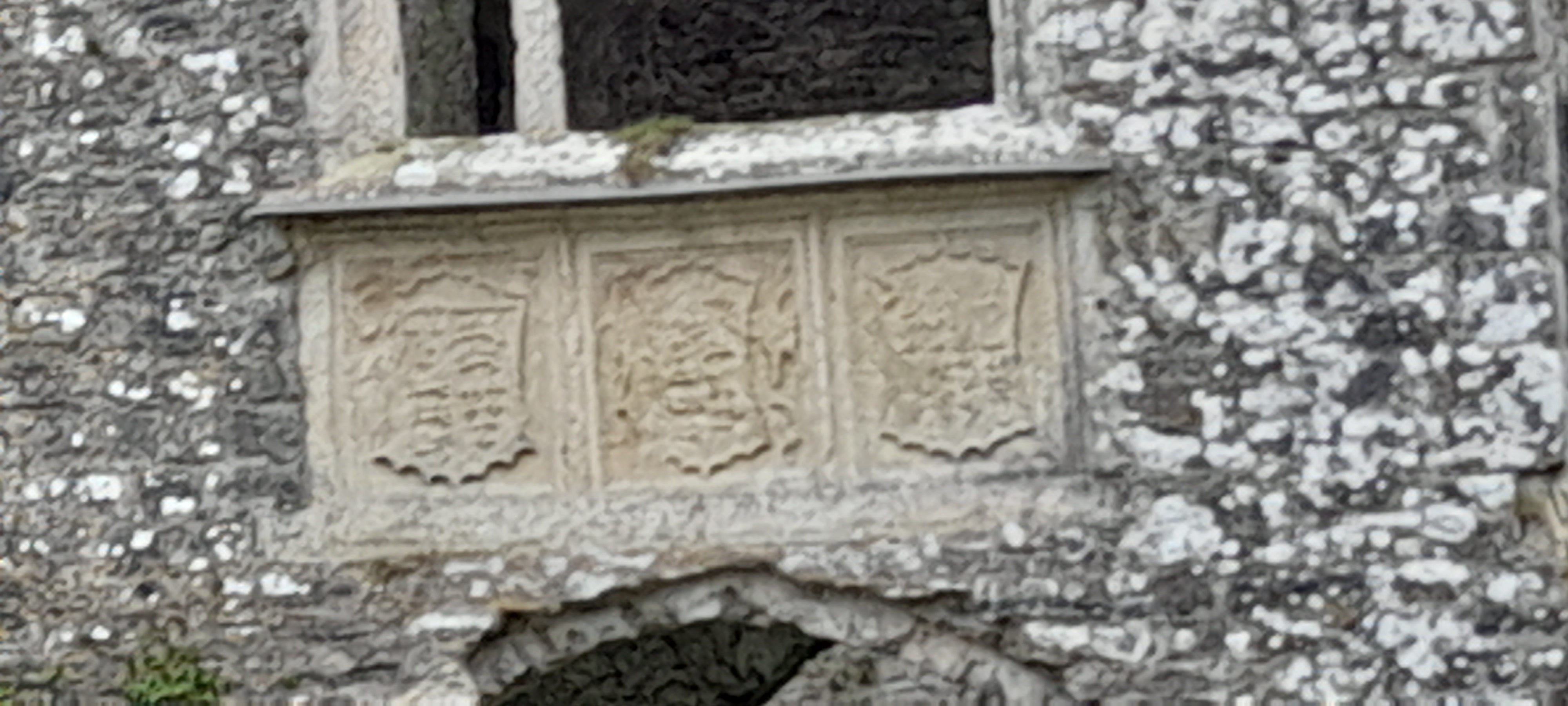
I've posted about Carew Castle before.  It was the home of Sir Rhys ap Thomas, the 'man who killed Richard III'.  It's a hidden gem of a castle.  From it's beginnings with Princess Nest, it's continued fortifications, and then it's turn around from defensive castle to luxury manor house, it's all to be discovered.  Henry VII even visited Carew for a celebration tournament hosted by Sir Rhys and you can see the arms of Henry VII and Prince Arthur still.


Carew was built by a river and the coastline in South Wales, thus ensuring a supply link if the castle was ever beseiged.  The original part of the castle, built by Nest and her husband, can be seen as you enter the castle.  Nest was beseiged as she sheltered with her children in the room above the drawbridge.
One of the impressive towers at Carew.
Once the civil wars ended in 1485, Carew began alterations to turn it into a 'home'.  New windows and frames were put in.
The garderobe from which Nest's husband is supposed to have escaped from.


Sir Rhys ap Thomas welcomed Henry VII to the castle.  You can see the original coats of arms still intact.

The doorway underneath the arms leads to the impressive new great hall built by Sir Rhys.


Tuesday, 1 March 2022

Celebrating St David's Day with Pembroke Castle

 Wales is often called the land of castles, and an awful lot of them were built by Edward 1st.  However, they had always been hill forts, wooden castles and hunting lodges built in Wales long before.  One of the oldest castles in Wales, and the birthplace of one of my favourite Kings, Henry VII, is Pembroke Castle.  It is a fabulous castle to visit, and has a magnificent round, stone keep built by William Marshall.  There is also the Henry VII Tower, where legend says 13 year old Margaret Beaufort gave birth to her only child, Henry Tudor, although it's more likely to have been the manor house built inside the castle grounds which no longer stands.


The fabulous round keep at Pembroke Castle.  In front is a map showing the castles and dates of when they were built.  There's a key that tells you which castles were built by the Normans, the Welsh Princes and Edward 1st.
View of Henry VII Tower from outside.

Inside the stone keep, which still has it's roof.


Plaque commemorating the birth of Henry VII.