Saturday, 14 April 2012

So what happened at the coronation banquet?

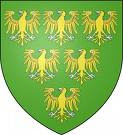
In my previous post, I looked at the coronation of Edward II and Piers, oops, I mean Isabella.   Piers had played an important role in the coronation, and it seems he had been in charge of the banquet that followed the coronation.   Isabella’s family included her uncles, Charles de Valois and Louis d’Evreux, as well as her brother, the future Charles IV.  Wearing royal purple seems to have upset many there, even if it did make Piers look like the god Mars.  The rest of the nobles ‘made do’ with cloth of gold.  Also offensive were the tapestries on show.    These had been specially made for the banquet, by the upholsterers John Engayne and John le Tapyter and cost £5.  They showed the emblems of England – Edward’s – and those of the Earl of Cornwall – Piers.  Doubtless the emblems of Isabella were displayed somewhere.    What totally out-raged Isabella’s family was the fact that Edward preferred to share Pier’s couch rather than Isabella’s.  They were disgusted and humiliated.  No doubt they encouraged Isabella, who was only 12, to feel likewise.  If, as Pierre Chaplais says, Edward was showing to the court, and the French in particular, that Piers was his ‘adopted brother’, why should they be out-raged?    Edward choosing to share his ‘brother’s couch’ could not have caused such offence.    It’s my opinion that Edward and Piers chose to show all those present, English and French, the exact nature of their relationship – that they were lovers, and that any marriage and alliances were secondary to them.    Edward would have wanted Piers to share in his special day, and no doubt Piers would have wanted to show all how important he was to Edward.   It might have been tactless,  and unchivalrous towards Isabella – but surely the French must have had some idea of the relationship between Edward and Piers, and marriage to a 12-year-old wasn’t going to change it.  There would be no deceit or denial for Isabella and her family. 

If only the chroniclers had detailed the exact behaviour of Edward and Piers!  Instead, all we are told is that Piers was very arrogant – and maybe it was his intention, to show no marriage alliance would come between him and Edward – and that one of the nobles was furious at the behaviour of Edward and Piers and ‘allegedly’ swore to kill Piers.  Added to that, the food didn’t taste very nice and some of it was burnt, although I’m sure this didn’t upset those present as much as Piers and Edward’s behaviour.   The Vita says ‘now for the first time nearly all the earls and barons of England rose against Piers Gaveston’ as a result of what happened at the banquet.  Maybe the English nobles had been bidding their time, waiting for a chance to attack Piers, and the complaints of the French gave them the excuse they wanted.   They may have been genuinely out-raged by Piers and Edward’s antics – whatever they did in private was acceptable, but flaunting it in front of the court, and Edward’s new bride and her family was just too much.  Or maybe Piers had grown far too proud.   If Edward and Piers were lovers, surely the nobles would not expect the 12 year-old Isabella to ‘change’ her husband’s nature?   And if they did believe this was possible, then surely they must have already tried to do this by exposing him to various court beauties.   But they knew the king had an illegitimate son, Adam, and that doing his duty would not be a problem for Edward.   In my opinion, it must have been how Edward and Piers had acted at the banquet,  and the nobles felt that Edward had not only humiliated Isabella and her family, but themselves and the dignity of the crown of England.   And I haven’t even started on Edward 'giving' all the wedding presents to Piers!

Sources –
Chaplais – Piers Gaveston, Edward II’s Adoptive brother
Hamilton – Piers Gaveston – Politics and Patronage in the reign of Edward II
Seymour Phillips – Edward II
Helen Castor - 'She-Wolves'

Monday, 9 April 2012

The Coronation of Edward II

The coronation of Edward II took place on Sunday, February 25th, 1308.  The king had just returned from France on February 7th, where he had married the 12 year old Isabella, daughter of the king of France.  He had left his kingdom in what he considered safe hands – Piers Gaveston had been left as Regent.  It seems this had been unopposed by the nobles.  Now the coronation loomed.

 It was obvious Edward wanted Piers to play a major role.  Invitations had been sent out on January 18th, and the Coronation was due to take place on February 18th.  It was delayed until February 25th. The St. Paul’s annalist speculates that this may have been due to attempts by the English and French nobles to oust Piers from a primary role in the ceremony, and refers to him and Edward as ‘two kings reigning in one kingdom, one in name and the other in deed’.  It’s ridiculous to think that either the English or French nobles honestly expected Edward to be passionately in love with his 12 year-old bride.  So why did they object to Piers playing a central role?  If, as Chaplais puts forward, Edward and Piers behaved as ‘adopted’ brothers, why should they care?  Piers had been accepted as Earl of Cornwall at the start of Edward’s reign, been married to Edward’s niece, Margaret de Clare and acted as regent.  So why the furore over Piers taking a primary role at the coronation?  In my opinion, the French nobles had become aware that the relationship between Edward and Piers was more than ‘adopted’ brothers, it  was in fact sexual.  Perhaps the fact that the king’s male lover was to play a primary role caused them to stir up trouble with the English nobles.   If Edward had had a mistress, she no doubt would have been hidden away from court and as a female played no part in the coronation.   As far as Edward was concerned, there would be nothing more pleasing than to have Piers play an important role in the ceremony.   Piers may have wanted the French to be in no doubt of his importance to Edward, and may have acted in an arrogant way.  OK, I concede he must surely have!  Seymour Phillips in his biography of Edward II compares the chroniclers to the tabloids of today, and that there began a ‘feeding frenzy’ of tales about Piers from this time – his arrogance, stealing from the royal treasury and sending money to Gascony – all of which were inaccurate.   It seems the delay for the Coronation may have been caused by the nobles seeking to curb Edward’s excessive reliance on Piers and Edward promised to address this at a later parliament.  However, Edward got his way and Piers took on a primary role in the ceremony.   Dressed in royal purple and pearls, the St Paul’s Annalist describes him as "so decked out that he more resembled the god Mars than an ordinary mortal".  I LOVE this description of Piers! 

So, apart from looking like the god Mars, what role did Piers play in the coronation?  He was given the task of carrying the crown of St Edward, and later taking possession of the Curtana sword – the sword of St Edward, which had been carried by the king’s cousin, the Earl of Lancaster.  Piers then fastened the spur on the king’s left foot.  Philip IV’s brother, Charles de Valois, fastened the right spur.  It must have been Edward’s idea that Piers be given these things to do, and no doubt, Piers was honoured and only too keen.

If what happened at the ceremony outraged both French and English nobles, it got worse at the banquet.  That will be the subject of my next post.

Sources –

Chaplais – Piers Gaveston, Edward II’s Adoptive brother

Hamilton – Piers Gaveston – Politics and Patronage in the reign of Edward II

Seymour Phillips – Edward II

Friday, 2 March 2012

Helen Castor's 'She Wolves'

For those who enjoyed Helen Castor's book 'She Wolves - England's Early Queens', the BBC has her presenting 3 documentaries on the subject.  They will be shown on BBC 4, on Wednesdays, starting Wednesday, March 7th, at 9pm.  The first show will feature Matilda and Eleanor of Acquitaine.  I'm looking forward particularly to Isabella, Edward II's queen, being featured.

Thursday, 23 February 2012

So, what was the truth about Braveheart?

Yes, it's full of inaccuracies!  Channel 5 went to work on Mel Gibson's 'epic', although Gibson doesn't get all the blame.  It all stems from an American visiting Scotland with the surname Wallace and becoming intrigued about William Wallace.  He then set out to write a book from a human viewpoint, not a historical one - yes, he really said that!   

The title 'Braveheart' comes from a poem written by 'Blind Harry' in 1470 - 165 years after Wallace's death.  The purpose for the poem?  Propaganda.  The Scots were worried James III was becoming too friendly with the English, and so looked back in history to find a hero for an independent Scotland - and Blind Harry - who wasn't blind - chose Wallace.  The Bailey family sponsored 'Blind Harry', and he wrote one of their ancestors into the poem as Wallace's wife.  It seems no-one knows who Wallace was married to.

The blue woad and kilts worn by Gibson's army were easily dismissed, as was the alleged 'Wallace sword' which turned out to be made of 3 separate weapons moulded together.  The weapons were also dissected.  Particularly interesting was the testing of the warbows from Edward Ist's army.  Wallace's army would never have been able to withstand the onslaught from the English army.  The battle of Stirling bridge was an opportunistic victory, the result of an ambush by Wallace and his fellow leader Robert of Lundy, who later died of his wounds - hence he wasn't chosen as the hero of the poem by 'Blind Harry'.  Wallace was not an 'ordinary' man, but a younger son of a knight, who first appears in a document in an act of theft. 

As for Wallace being the father of Edward III, this was scoffed at for obvious reasons - Isabella was a child, still living in France.  This easy dismissal meant there was no mention of Edward II or Piers/Phillip being thrown out of the window.  Oh well......

Wallace did his best to evade capture - and you can hardly blame him as he knew what fate would await him.  He fled to France to try and persuade Philip IV to help him and involve the Pope, which failed. 

The only shock for me was that this film won 5 Oscars - yes, really!  Including one for best film. 

Friday, 17 February 2012

The 'truth' about 'Braveheart'

On Tuesday, February 21st, channel in the UK is showing a documentary about the truth behind Mel Gibson's (dire, IMO), 'Braveheart'.  I hadn't realised how influential this film was until Kathryn - on her marvellous Edward II blog - revealed that 'William Wallace was the father of Edward III' was one of the most popular searches on her website.  Just a simple check on the dates easily proves this a myth, but unfortunately, Gibson's slander has become accepted as truth for some cinema-goers.  I've no idea what this documentary is like, but I'm looking forward to it.  I'm wondering if Piers will get a mention, as in 'Braveheart' he has morphed into 'Phillip' and is thrown out of a window by Edward Ist - as if!  I've only ever sat through 'Braveheart' once completely, and that was a big effort on my part, and then watched clips of it.  It is strewn with errors - even the Beefeaters at the Tower of London mock it - and I just wonder whether a 60 minute documentary will be long enough to expose every mistake.  I'll report back on the documentary after it's screened.

Here's a link to Kathryn's brilliant and well-researched article on the slander of Edward II and his children -

http://edwardthesecond.blogspot.com/2011/02/edward-ii-and-his-children-and-why.html

Tuesday, 14 February 2012

Valentine Greeting

I have shamefully neglected this blog for so long!  I've started 3 Piers-related posts and abandonned them all.  But as today is Valentine's Day, I can always rely on The Valentine Generator http://dagblog.com/humor-satire/valentine-generator-452

So here is Edward II's valentine greeting for Piers!

To my Scrumptious Gascon Piers,
You are the jewel of my crown. I want to joust with you more than any other lance in the whole court.
The first time we thatched, I felt in my splendid fingers, and I was so overwhelmed that I could barely thatch. I knew that we would throb together for years.
Whenever you tease, it makes me swoon gracefully and spend like a parliament .
I will toast with you provocatively until the treasury empties and the country revolts.
Splendid Valentine's Day!
Love, your devoted King

Thursday, 5 January 2012

Not quite the best books of 2011………

I’ve been meaning to post my top ten books of 2011, but after much searching of my book cases, I have to say I don’t have a ‘best 10 books’, so what follows is a mixture of the best, adequate, interesting and ‘how did this get written’ review of books I’ve read in 2011.


1.        Best book of 2011 was undoubtedly ‘Fatal Colours’  by George Goodwin.  There were several books released about the battle of Towton in 2011, but Goodwin’s book gripped me.  It set the scene for the so-called ‘Wars of the Roses’ origins, which is open to debate.   The chapter on the possible schizophrenia of Henry VI was revealing and sympathetic.   The analysis of the battle is first rate.  A definite read for anyone interested in this topic.

2.       Best fiction book has to be Susan Higginbotham’s ‘The Queen of Last Hopes’.  As in her previous novels, once I started reading it, I couldn’t put it down.  It gives a very sympathetic portrayal of a much maligned Queen, Margaret of Anjou.  Her struggle to support her husband and her son is at times heart-breaking, and there is a very charismatic portrayal of Henry Beaufort, Duke of Somerset.   To say Margaret lead an eventful life is an understatement, and Susan Higginbotham covers all stages of her life.  I’m amazed she lived as long as she did.

3.       After all the books on Henry VIII and the other Tudors , most notably Anne Boleyn, Giles Tremlett’s ‘Catherine of Aragon’ attempts to remind us of Catherine’s life.  Tremlett  is undoubtedly on ‘Catherine’s side’, and examines documents in Spain dating from the time of ‘the great matter’, the divorce.  Tremlett makes the claim this information has rarely been seen, and while it is interesting to read these documents, they are unsurprisingly pro-Catherine and not real ‘proof’ that she was telling the truth about her wedding night to Prince Arthur.  It is from these documents that the image of the ‘sickly prince’ emerges. Tremlett also irks me by referring to Anne Boleyn’s sharp tongue, nagging ways etc. He also constantly calls her Boleyn – but never refers to Catherine as ‘Aragon’.  Just lay your cards on the table and say you are pro-Catherine and anti-Anne Boleyn, and make no claim to be impartial is my advice.  Pro-Catherine fans will obviously love it.

4.       I am unashamedly pro-Anne Boleyn, and after the glut of books that came out in 2010, 2011 was a leaner year.  I will buy any book relating to Anne Boleyn and her family.   I was delighted that Paul Friedman’s Anne Boleyn, first published in 1884, was re-issued.  It was once THE book to read on Anne Boleyn and I was so happy to finally have my own copy.

5.       Another Anne Boleyn book was ‘Anne Boleyn in her own words etc’ edited by Elizabeth Norton.  It contains written accounts of contemporaries on Anne Boleyn plus any documents pertaining to her.  A worthy addition to my collection.

6.       I have Robert Hutchinson’s previous books on Thomas Cromwell, the House of Treason (The Howard family) and ‘Henry VIII’s last days’.  These books are interesting and I tend to dip into them every so often rather than read them from cover to cover.  ‘The Young Henry VIII’ follows closely on the heels of David Starkey’s ‘Young Henry’, and both books reveal very little that I didn’t already know about Henry.  One book on the young Henry VIII was quite enough, and in my opinion, no-one can better Starkey.  I would never have bought it had I not seen it in the ‘bargain basement’.

7.       ‘The Boleyns’ by David Loades is a definite must to find out about Anne Boleyn’s early family and what happened to them after her fall, particularly those who survived and flourished in her daughter Elizabeth’s reign.

8.       While Loades dealt with the Boleyn family, Alison Weir centred on Mary Boleyn – and it must be said, there is very little to be said on Mary Boleyn.  There is very little evidence that survives on Mary, certainly not enough to fill a biography, so we are left with a lot of supposition – what if?  maybe,  this could be…. etc.  For some strange reason there is a picture of Francis 1st’s queen, Claude on the cover – very bizarre.  The title ‘Mary Boleyn, the infamous whore’ is obviously meant to grab attention.  In all honesty, does Mary warrant a biography?   In my opinion, no – that she was Anne’s sister and the mistress of Henry VIII is all the important information that one needs to know about her.   Even if Henry VIII had fathered any of her children, they played no part in the Tudor dynasty.   I have not yet bought ‘Bessie Blount’, a biography on Henry VIII’s mistress and mother of his bastard son Henry Fitzroy, and to be honest, can’t see myself doing so as I suspect there is even less information on her than Mary Boleyn.

9.       ‘The Winter King’ by Thomas Penn is a welcome biography on Henry VII, who is so often over-looked.  I first thought it was a novel – it certainly looks like one and the blurb at times read like one.  I’ve only just started it but am enjoying it.

10.   Erm, there isn’t a number 10!  There’s been a real lack of Medieval  books for me this year.  The Tudors continue to dominate, and even the books out this year are among some of the weakest.  Even novelwise, there was nothing that caught my eye.  Please someone write a half-decent novel on Piers Gaveston.